



Brave Ideas Season 17, Episode 3
Presented by

Learn how Flexspace AI is transforming coworking with their ecommerce revenue platform, featuring SmartPricing Agent, an AI-powered dynamic pricing engine. Tap here
Scaling Without Losing the Soul of the Brand
In this episode of Brave Ideas, Caleb Parker and co-host Eyal Lasker sit down with Alex Young, Managing Director at Projects, the Brighton-born coworking brand now expanding into new cities across the UK.
Alex brings a rare mix of operational discipline, brand instinct, and genuine community-led leadership. She started her journey with Projects on the front desk, went on to build experience across other leading workspace brands, and has now returned to lead the next phase of growth as Projects expands beyond Brighton into places like Tunbridge Wells, London, Bristol, and Cambridge.
This conversation gets into what it really takes to scale a coworking brand without losing the culture, community, and hospitality-led experience that made it work in the first place.
Alex shares why retention matters more than cramming in density, why transparent pricing builds trust, and why the best workspace brands know exactly what they stand for before they start scaling.
Listen to the full episode to hear how Projects thinks about product mix, revenue quality, member experience, spatial planning, AI, and the commercial trade-offs behind building a profitable coworking brand.
Further Reading
In the episode, Caleb references an interview with Alana, Projects’ Brand Manager, and Lucy McInally on brand and brand activation. It is a useful companion piece to this conversation, especially if you want to go deeper on how Projects thinks about brand as a driver of community, culture, and member experience.

🎧 To listen as a podcast FOR FREE switch to audio above,
or follow Brave Ideas on Apple, Spotify, or wherever you listen.
What You’ll Learn in This Episode
How Alex went from working on the front desk at Projects to becoming Managing Director.
Why every Projects team member has worked on the front desk, and why that experience shapes the company’s approach to service, community, and operations.
How Projects grew from one Brighton building into a platform now expanding into new UK cities.
Why Projects would rather sacrifice density than compromise the member experience.
How transparent pricing can support retention, trust, and long-term revenue growth.
Why brand values matter commercially, not just creatively.
How Projects thinks about balancing coworking, private offices, enterprise suites, meeting rooms, event spaces, gyms, and lifestyle amenities.
Why not every amenity needs to generate direct revenue to create business value.
What Projects learned from replacing an underused podcast suite with a specialist podcast production partner.
How Alex thinks about designing flexible, multifunctional spaces that can adapt without frustrating members.
Why AI should help teams become more human, not less.
How digital discovery, ecommerce, chatbots, and booking journeys are changing the way customers interact with flex operators.
Key Takeaways for Operators
Retention is not a soft metric, it is a commercial strategy.
Alex is clear that Projects prioritises member experience, trust, and long-term relationships over squeezing every possible desk into the floor plan. That means designing spaces where people feel they can move, work, meet, and connect without feeling overcrowded.Density can damage the product if it erodes the member experience.
Projects deliberately avoids overpacking coworking areas because the brand promise is built around feeling at home at work. If members cannot find space to work, take calls, meet people, or relax, the product breaks.Transparent pricing builds trust.
Projects publishes clear pricing and approaches rate increases with honesty. The goal is not to surprise members with hidden costs or inconsistent deals, but to build enough trust that members understand the value they are paying for.Community teams are the backbone of the business.
Alex makes the point directly, the front desk and community team make or break a coworking space. They are the first impression, the daily relationship, and often the reason members stay.Amenities should be judged by their strategic value, not just direct revenue.
The gym at Projects does not directly make money, but it reinforces the lifestyle-led brand promise. The event space could generate more income as an office, but it plays an important role in community, brand, and local market activation.Do not chase trends without a long-term plan.
Alex uses the example of reformer pilates to explain the risk of building around what is fashionable today. Projects is thinking about multifunctional spaces that can serve yoga, pilates, physiotherapy, and other uses over time, rather than locking into a trend that may fade.AI should remove admin friction, not replace human judgement.
For Projects, AI is useful where it reduces manual work, improves reporting, helps teams spot patterns, and frees people up to spend more time with members.
Key Takeaways for Real Estate Investors and Landlords
A strong coworking brand can improve revenue quality by attracting aligned customers.
Projects is not just filling space, it is curating a member mix around shared values, culture, and lifestyle. That matters because customer alignment can reduce friction, improve retention, and support pricing power.Occupancy alone is not enough.
Projects looks at occupancy, average desk rate, churn, monthly revenue, and member retention. The more important question is whether the revenue is sustainable, diversified, and aligned with the product.Enterprise demand can be valuable, but only if it does not overwhelm the community.
Projects accommodates larger suites, including around 100 seats, but avoids letting enterprise customers dominate the building. The aim is to preserve the broader community dynamic while still serving larger companies.Flexible design protects long-term asset performance.
Alex is honest about the risk of giving members something, then taking it away. For landlords and investors, the lesson is simple, design choices need to account for long-term adaptability, not just launch appeal.Lifestyle amenities can support pricing and retention, even when they do not directly monetise.
A gym, event space, rooftop bar, café, or wellness room may not always produce direct revenue, but they can strengthen the value proposition and help justify premium positioning.Local market knowledge matters.
Projects is not copy-pasting Brighton into every city. The team looks at the local community, local businesses, local partnerships, and the specific demand profile of each market before shaping the product.Operators need real operational expertise.
This conversation is a reminder that coworking is not just real estate with desks. It requires brand, hospitality, community, sales discipline, pricing strategy, technology, and constant operational judgement.
Behind The Scenes
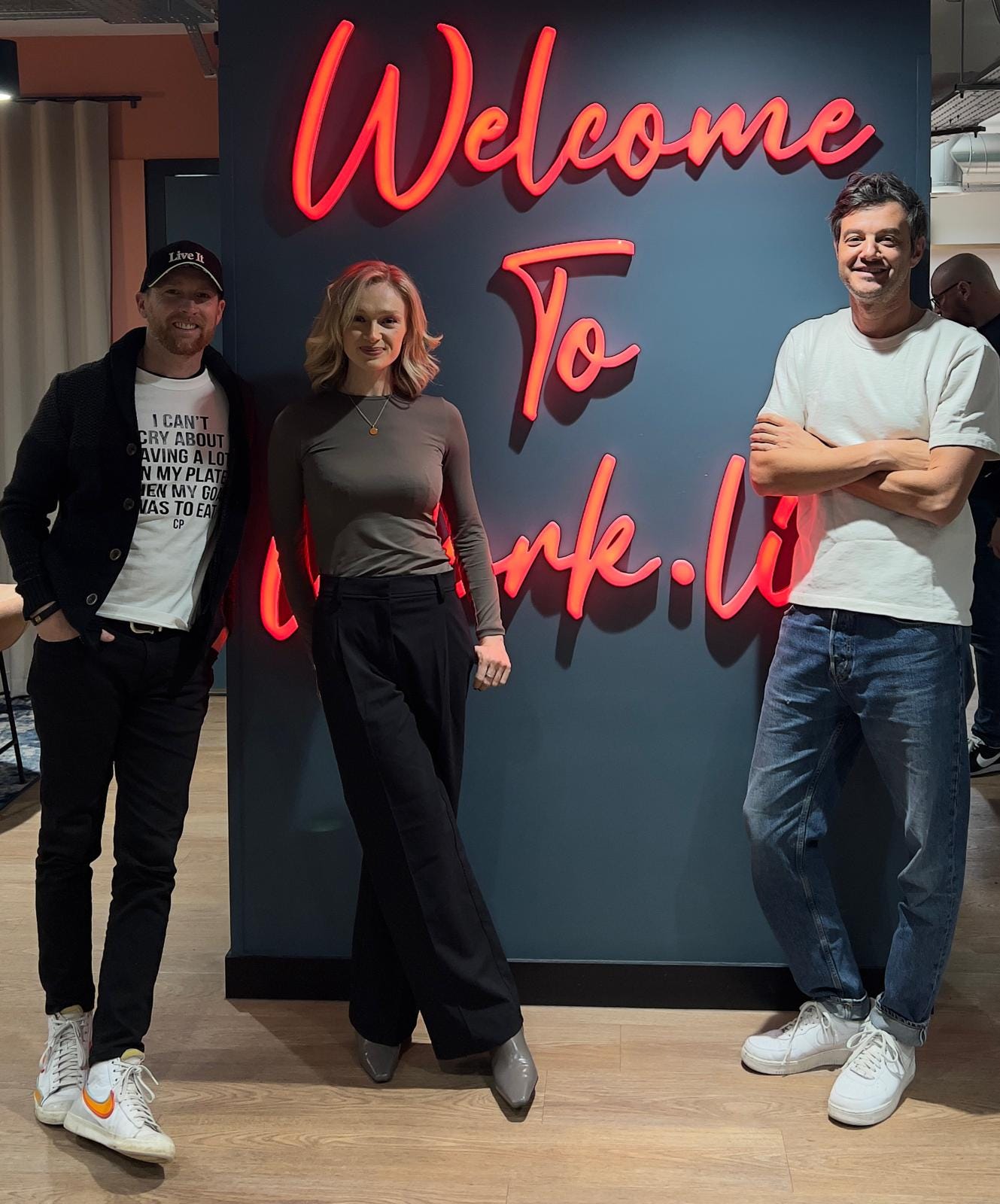
We want to give a special shoutout to Nat and the team at Work.Life, where this episode was recorded, for their brilliant podcast studio and hospitality throughout the season. Tap here to book their podcast studio yourself!
After the shoot, Caleb, Alex and Eyal ran into some other flex CEOs in the Work.Life reception.


Brave Ideas Season 17
Season 17 of Brave Ideas explores one of the most important questions in office real estate today, how to build a more profitable flex business. Across the season, Caleb Parker speaks with industry leaders about the real commercial drivers behind Space-as-a-Service.


