



Brave Ideas Season 17, Episode 4
Presented by

Learn how Flexspace AI is transforming coworking with their ecommerce revenue platform, featuring SmartPricing Agent, an AI-powered dynamic pricing engine. Tap here
The Question Landlords Should Be Asking
Landlords have been asking whether flexible workspace belongs in their buildings for years.
But is that even the right question?
In this episode of Brave Ideas, Caleb Parker speaks with Wybo Wijnbergen, Co-Founder and CEO of infinitSpace, the company behind Beyond, a flexible workplace platform built in partnership with landlords.
Wybo brings a rare perspective to this conversation.
He was previously Managing Director for WeWork in Europe,
where he helped open 50 locations in four years.
Today, he is building infinitSpace around a different model, helping landlords operate flexible workplace through partnership structures designed to improve occupier experience and strengthen asset performance.
The conversation starts with the origin story of infinitSpace, including how the business launched during COVID, raised its first million euros, and won its first management agreement before the company itself had a track record.
Then the episode quickly moves into a bigger question:
Are landlords still evaluating flex through the wrong lens?
Wybo explains why occupancy alone is not enough, why higher rent is not always the better decision, why performance clauses need to protect both landlord and operator, and why the quality and diversification of occupiers inside a flex space may matter more than the industry currently recognises.
This is not another conversation about whether landlords should “do flex.”
It’s about what landlords should be measuring, how they should be underwriting, and whether asking better questions could unlock better outcomes for their assets.
Listen to the full episode to hear how infinitSpace is helping landlords rethink flexible workplace, from data and yield management to brand, retention, underwriting, and valuation.
🎧 To listen as a podcast FOR FREE switch to audio above,
or follow Brave Ideas on Apple, Spotify, or wherever you listen.
What You’ll Learn in This Episode
How infinitSpace went from a COVID-era startup idea to a growing flexible workplace platform across London, Amsterdam, and Berlin.
Why winning the first landlord partnership was less about company track record and more about trust, timing, urgency, and personal credibility.
How Wybo’s experience opening 50 WeWork locations in Europe helped create confidence with the first landlord partner.
Why management agreements need clear performance clauses on both sides.
Why operators also need protection when landlords fail to maintain the quality of the asset or invest properly in the space.
Why brand is not just design, furniture, or materials, but the full perception of experience from first touchpoint to final interaction.
How infinitSpace thinks about integrating the Beyond brand into the wider asset rather than creating a disconnected flex product inside the building.
Why yield management is still underdeveloped across parts of the flexible workspace industry.
How operators should evaluate retention, churn, pricing, void periods, customer acquisition cost, and historical demand before deciding whether to keep or replace an occupier.
Why good operators need the discipline to walk away from buildings where the underwriting does not work.
How infinitSpace is using AI, local market data, and internal systems to speed up underwriting and help landlords evaluate potential flex opportunities.
Why Wybo believes flexible workspace should be judged not only by occupancy and NOI, but also by the quality and diversification of occupiers using the space.
Key Takeaways for Operators
The first deal is a trust problem.
Wybo is clear that the first management agreement was the hardest. The company had no operating track record, but he and his co-founder had conviction, relevant experience, and the right landlord opportunity at the right time. For operators, the lesson is blunt, the model does not sell itself.Performance clauses should protect both sides.
If an operator underperforms, the landlord needs a way out. But if a landlord fails to maintain the asset, invest in the space, or preserve the quality needed to deliver the brand experience, the operator also needs protection.Occupancy is not the whole story.
A building can be full and still underperform. Operators need to understand revenue quality, product mix, pricing power, meeting room usage, contract terms, churn risk, and the real economics behind each customer.Higher rent is not always better.
Replacing a below-market occupier may look attractive on paper, but the operator needs to account for void periods, broker fees, sales commissions, marketing cost, and the historical demand for that specific office or product type.Bad buildings can damage good operators.
Wybo makes the point clearly, there is no value in operating 100 buildings if a large share of them do not work. Underperforming locations consume time, distract the team, disappoint landlords, damage the brand, and pull attention away from stronger-performing assets.
Key Takeaways for Real Estate Investors and Landlords
The question is not just, “Should we add flex?”
The better question is, what role should flexible workplace play inside the asset strategy? Is it there to reduce vacancy, attract occupiers, improve service, create optionality, diversify income, support enterprise demand, or strengthen the building’s wider performance?Flex should not be treated as a bolt-on amenity.
Wybo argues that the flex experience should feel integrated into the building. The design, service model, brand, and operational experience should support the wider asset, not sit apart from it.Management agreements require active partnership.
In a management agreement, the landlord is not just collecting rent. They are funding the space, sharing in the outcome, and depending on the operator’s performance. That requires better reporting, better alignment, and more sophisticated questions.Data changes the quality of the decision.
Better underwriting, forecasting, yield management, and market intelligence can help landlords understand whether flex works in a specific asset, at a specific price point, for a specific demand profile.Occupier quality may be under-recognised in valuation.
One of Wybo’s strongest points comes near the end of the episode. If a flexible workspace contains a diversified base of high-quality occupiers, including enterprise teams and strong-growth businesses, landlords and valuers may need to look beyond the operator agreement and consider the value of the underlying occupier mix.
Behind The Scenes
This episode was recorded at FlexTribes by Space Plus in Aldgate, London.


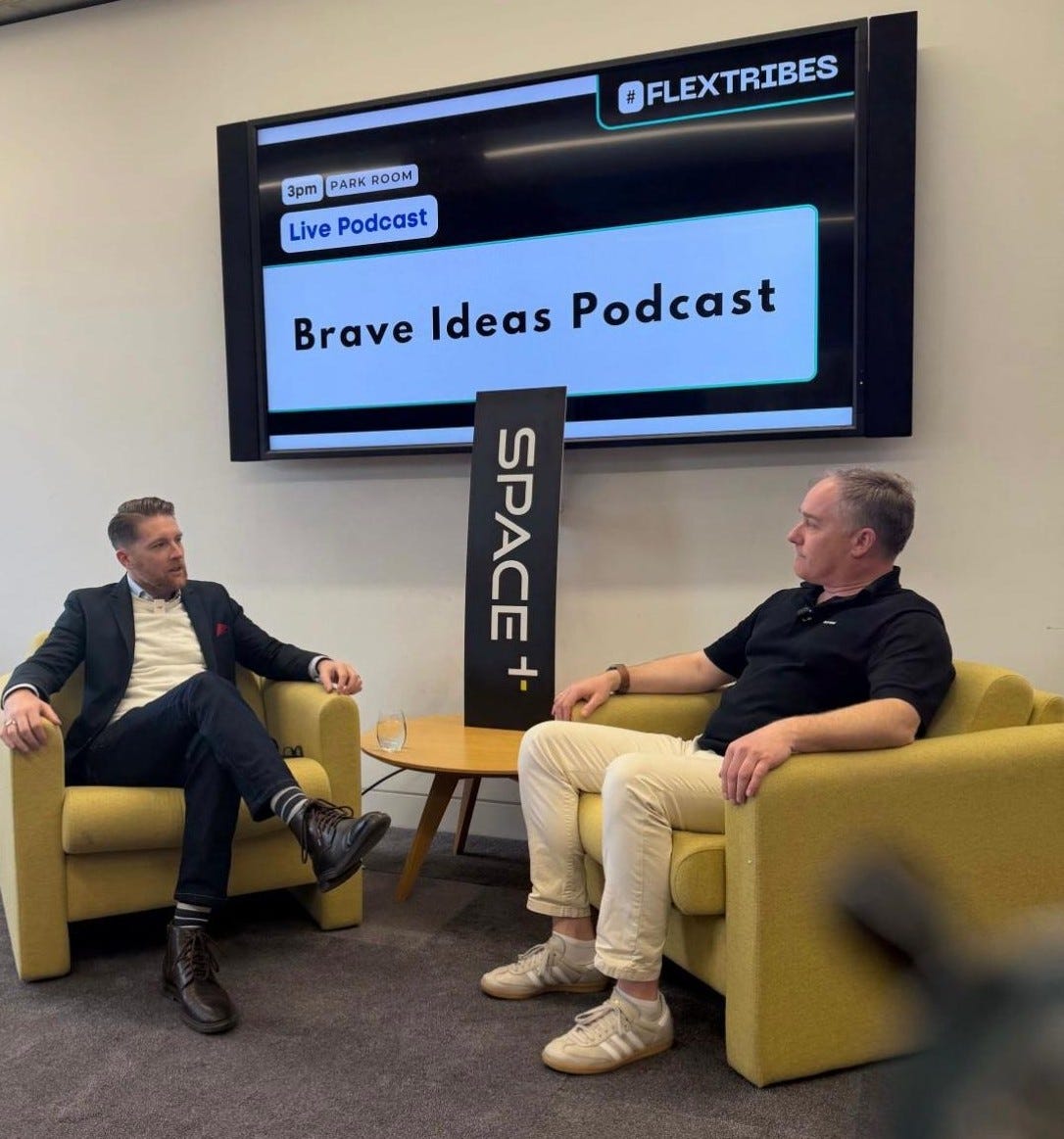
Wybo had flown in from Amsterdam a the night before the event, and we both joined the Coworking operator dinner, hosted by Flexspace AI, the night before recording, which gave us a chance to compare notes on the market before sitting down for the podcast.


Before we recorded, we both sat in several FlexTribes sessions covering topics like yield management, retention, management agreements, profitability, and valuation. Those conversations became part of the backdrop for the episode, and you can hear that in the way we debrief some of the ideas live during the interview.


Brave Ideas Season 17
Season 17 of Brave Ideas explores one of the most important questions in office real estate today, how to build a more profitable flex business. Across the season, Caleb Parker speaks with industry leaders about the real commercial drivers behind Space-as-a-Service.


