



Brave Ideas Season 17, Episode 7
Presented by

Learn how Flexspace AI is transforming coworking with their ecommerce revenue platform, featuring SmartPricing Agent, an AI-powered dynamic pricing engine. Tap here
From Rent Roll to Retention
For decades, office real estate was built around a simple idea, sign the lease, collect the rent, manage the building.
But that model has been under pressure in recent years.
Customers want more flexibility.
SMEs need room to grow and contract.
Teams want better service.
Landlords need more resilient income.
And in a market where occupiers have more choice, the operators who understand people may be better positioned than landlords who only understand space.
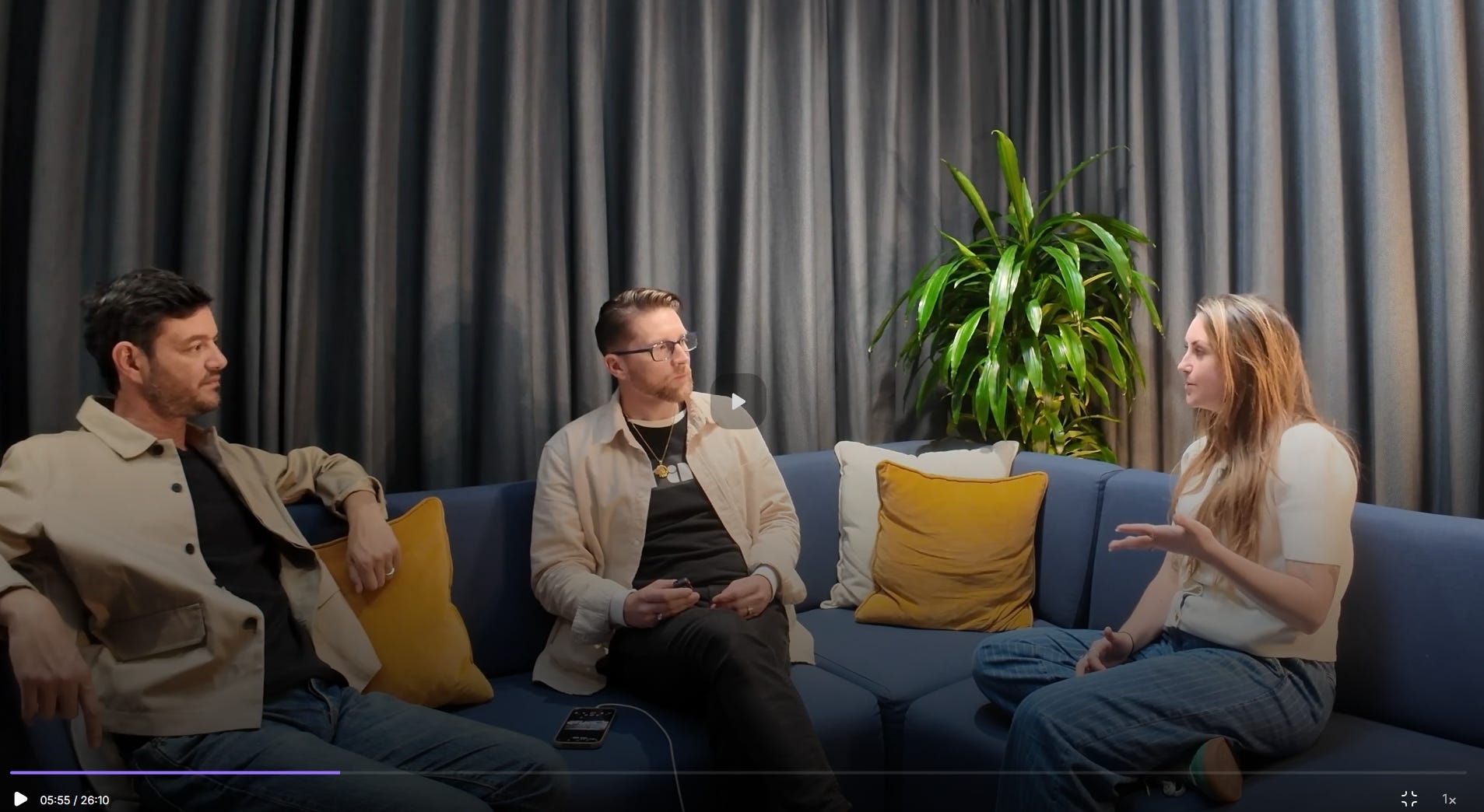
In this episode of Brave Ideas, Caleb Parker is joined by Rebekah Lloyd-Beere, Head of Flex at MediaCity, where she leads a 100,000 SqFt flex operation in Manchester, England.
Rebekah’s career did not start in traditional property.
She came from hospitality, joined MediaCity as a receptionist ten years ago, and built her career by identifying what customers needed before the organisation had roles designed to serve them.
Today, she oversees the P&L, customer experience, and growth of MediaCity’s flex business.
Joining as co-host is Eyal Lasker , CEO of Flexspace AI.
This conversation is about a shift in how office landlords, investors and operators should think about value, and moving from rent roll to retention, customer lifetime value, and the operating behaviours that keep income in the building.
Rebekah explains why flex is not just about shorter contracts or higher desk rates. It is about retention, trust, customer lifetime value, and knowing when the best commercial decision is not to squeeze the highest rent today, but to keep the right customer for the long term.
We get into the practical decisions behind that mindset, from helping a customer downsize rather than lose them, to using virtual offices, meeting rooms, podcast studios, and day bookings as entry points into long-term membership.
Rebekah also explains why small hospitality details, remembering names, understanding businesses, checking in when people are struggling, can directly influence retention.
For office landlords and investors, the message is clear, the next phase of office value will not be created by rent roll alone. It will be created by operating models that keep customers, grow relationships, and protect income through flexibility.
Listen to the full episode to hear how MediaCity is turning flex into a customer retention strategy.
🎧 To listen as a podcast FOR FREE switch to audio above,
or follow Brave Ideas on Apple, Spotify, or wherever you listen.
What You’ll Learn in This Episode
Why Rebekah believes office real estate is ultimately a people business.
How MediaCity built a 100,000 SqFt flex operation around customer experience, retention, and SME growth.
Why the highest rent today is not always the best long-term commercial decision.
How helping a customer downsize can become a retention strategy rather than a loss.
Why virtual offices and day bookings can become gateways into long-term membership.
How meeting rooms, podcast studios, and content facilities create both ancillary revenue and future demand.
Why hospitality skills may be more valuable to flex operators than traditional property experience.
How customer trust can protect income, reduce churn, and support long-term asset performance.
Why landlords need to think about customer lifetime value, not just rent per SqFt.
How small operational details can have a direct impact on retention and revenue quality.
Key Takeaways for Operators
Retention is not a renewal tactic, it is an operating philosophy.
Rebekah’s approach is simple, know the customer before there is a problem. If a business is struggling, the answer is not always to enforce the contract. Sometimes the better decision is to help them resize, protect the relationship, and keep them in the ecosystem.Flex cannot just mean premium pricing.
Rebekah makes a clear point, flex is supposed to be flexible. If the model only works when customers keep paying for space they no longer need, it is not really flexible. It is just a shorter lease with better branding.The best operators understand the difference between price and value.
Rebekah is willing to accept a lower initial rate for the right customer when she sees growth potential, retention upside, and strategic value to the wider estate. That does not mean ignoring the P&L, it means managing for longer-term income quality.Ancillary revenue should also be a customer acquisition channel.
Meeting rooms, podcast studios, content spaces, virtual offices, and day offices are not just bolt-on revenue lines. They introduce people to the building, the brand, the team, and the experience.Hospitality is not softness, it is commercial discipline.
Remembering names, understanding business needs, checking in when someone is struggling, and treating every customer as important are not cosmetic gestures. They create trust, and trust is what keeps customers from leaving.
Key Takeaways for Real Estate Investors and Landlords
Stop underwriting flex like it is just a rent premium.
The real upside is not only higher £ per SqFt. It is customer diversification, retention, ancillary income, SME growth, and the ability to capture demand that traditional leasing would miss.A building without an operating strategy is exposed.
If landlords rely only on agents, leases, and fit-out to drive value, they risk missing the customer relationship layer. MediaCity’s example shows how value can be created through active management, not just asset ownership.Revenue quality is more nuanced than headline desk rate.
A lower-paying customer who stays, grows, uses meeting rooms, upgrades over time, and contributes to the ecosystem may be more valuable than a higher-paying customer with weak loyalty.The strongest flex operators may reduce leasing risk across the wider asset.
A well-run flex platform can act as a demand funnel, bringing in SMEs, startups, creators, and project-based teams that may eventually grow into larger office requirements.Customer lifetime value should be part of the landlord’s underwriting model.
Traditional office underwriting still leans heavily on lease length, covenant, ERV, incentives, voids, and capex. In an operating model, landlords also need to understand conversion, churn, retention, upsell, downgrade risk, meeting room usage, and ancillary spend.The future office landlord needs operational empathy.
That does not mean being charitable. It means understanding that members’ businesses fluctuate. Operators who can flex with those businesses may retain income that a rigid landlord would lose.
Behind The Scenes
We want to give a special shoutout to Nat and the team at Work.Life, where this episode was recorded, for their brilliant podcast studio and hospitality throughout the season. Tap here to book their podcast studio yourself!
Rebekah also recently co-hosted our Brave Ideas x Flexspace AI event on Hacking the New Office Product for Hybrid Companies


Tap here to see Rebekah’s appearance on Brave Ideas Friday Five
Season 17 of Brave Ideas explores one of the most important questions in office real estate today, how to build a more profitable flex business. Across the season, Caleb Parker speaks with industry leaders about the real commercial drivers behind Space-as-a-Service.


