



Brave Ideas Season 17, Episode 10
(Season Finale)
Presented by

Learn how Flexspace AI is transforming coworking with their ecommerce revenue platform, featuring SmartPricing Agent, an AI-powered dynamic pricing engine. Tap here
De-Risking Flex Starts Before the Doors Open
Opening a new flex location is hard enough.
Opening your first location around 85% occupied before the doors officially open is something different.
In this episode of Brave Ideas, Caleb Parker is joined by Mark Gregson, CoFounder at Juntos, to unpack how the new coworking and flex office brand de-risked its first deal, took over a former WeWork location in Holborn, and launched with strong demand already validated.
Mark teamed up with his CoFounder, James Hennessy to launch Juntos House.
Juntos House is a 28,892 SqFt building on a 12-year lease with no breaks. Rather than starting from shell and core, Juntos inherited high-quality existing infrastructure, reduced its upfront CapEx requirement, and created a faster path to market.
That deal structure helped make the investment case more attractive, shortened the expected payback period, and gave the business early cash flow to support future growth.
Mark explains why Juntos is not following a standard copy-and-paste expansion model. The team is already looking at opportunities in London, Amsterdam, and New York, while also exploring coffee shops, play cafes, and family-friendly work concepts that respond to changing customer demand.
This conversation goes deep into what makes a flex deal work commercially, from CapEx efficiency and investor alignment to lease structure, revenue quality, customer covenant, retention, and community.
Mark also shares a strong view on what community should actually mean in a coworking environment. For him, it is about understanding the people in and around the building, designing around their non-negotiables, and creating a place where members feel happy, productive, and connected.
Listen to the full episode to hear how Juntos is thinking about the next generation of flex, the opportunity in former operator spaces, and why de-risking a deal starts long before the first member walks through the door.
🎧 To listen as a podcast FOR FREE switch to audio above,
or follow Brave Ideas on Apple, Spotify, or wherever you listen.
What You’ll Learn in This Episode
How Juntos opened its first location around 85% occupied.
Why Juntos took a 12-year lease with no breaks on its first flex deal.
How taking over a former WeWork site helped reduce CapEx and speed up launch.
Why existing infrastructure can materially change the risk profile of a flex deal.
How early demand validation helped support the investment case.
Why Mark and James Hennessy are looking at London, Amsterdam, and New York.
How Juntos is thinking about coffee shops, play cafes, and family-friendly work environments.
Why revenue quality matters alongside occupancy.
How longer customer commitments can create more stable early cash flow.
Why community should connect into the local area around the building.
How workplace experience, happiness, and productivity are linked.
Key Takeaways for Operators
De-risking starts with the building, the fit-out, and the demand.
Juntos House worked because the team found a building where demand had already been validated and the existing infrastructure was strong. That meant lower CapEx, faster launch, and a more attractive investment case.Former operator spaces can create a faster path to market.
Taking over a former WeWork location gave Juntos a fitted platform to build from. The team still had to rebrand, reposition, and soften the space, but they avoided the cost and time burden of a full fit-out from shell and core.Opening at 85% occupancy changes the cash flow story.
Strong pre-opening demand gave Juntos early revenue visibility. For a new operator, that matters. It supports investor confidence, reduces early trading risk, and creates a stronger base for future growth.Revenue quality is more than filling desks.
Mark talks about the importance of customer covenant, contract length, and cash flow stability. Occupancy matters, but the quality and durability of that revenue matters just as much.Community needs to be built around real human needs.
For Mark, community is about more than events. It means understanding the different ways people connect, what makes them happy, and what keeps them coming back to the workplace.
Key Takeaways for Real Estate Investors and Landlords
CapEx efficiency can make flex more investable.
A lower upfront capital requirement can improve the risk-return profile of a flex deal. In the case of Juntos House, inheriting existing infrastructure helped create a more efficient launch model.Lease structure still has a place in flex.
While many operators have moved toward management agreements, Juntos took a 12-year lease with no breaks on its first location. That decision was based on confidence in the building, the location, the demand, and the economics of the deal.Former flex spaces can be repositioned without starting again.
Landlords holding fitted space from a previous operator may have an opportunity to bring in a new brand, refresh the product, and reactivate demand without a full reset.Occupancy is only one part of the underwriting story.
The stronger question is whether the income is durable. Contract length, customer quality, retention, CapEx burden, incentives, and investor cost of capital all shape whether a flex location can generate sustainable returns.Experience can support retention and long-term value.
Mark’s argument is that people stay in places where they feel good, supported, and understood. For landlords and investors, that has a direct link to churn, renewal probability, and income resilience.
Behind The Scenes
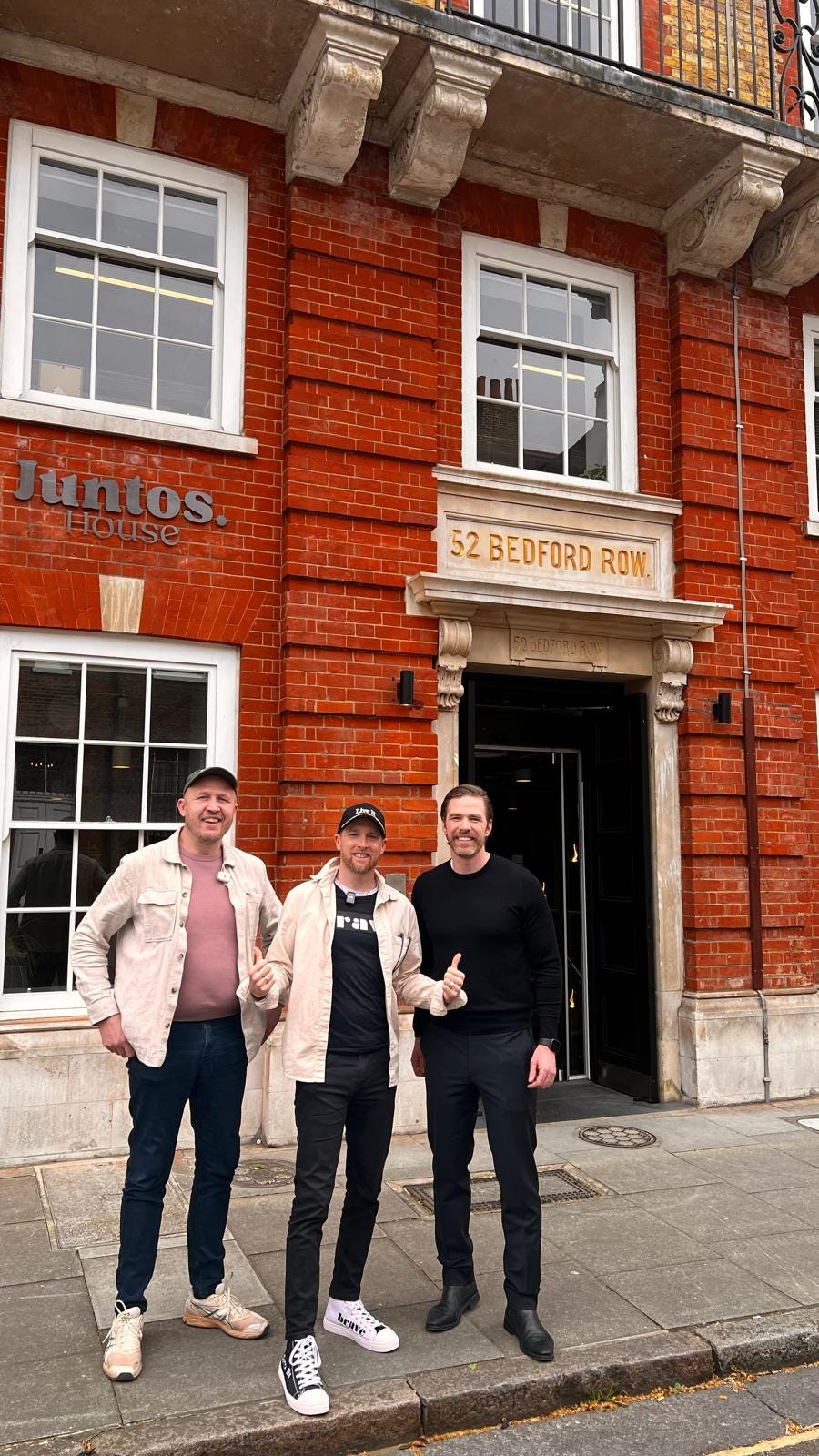
This episode was recorded onsite at Juntos House in Holborn, just before the building officially opened.

That’s a wrap for Brave Ideas Season 17!
Thank you for tuning in all season!
Season 18 drops 1 July
Want a sneak peek?


