



Brave Ideas Season 17, Episode 8
Presented by

Learn how Flexspace AI is transforming coworking with their ecommerce revenue platform, featuring SmartPricing Agent, an AI-powered dynamic pricing engine. Tap here
The Frontline Knows Before the Dashboard
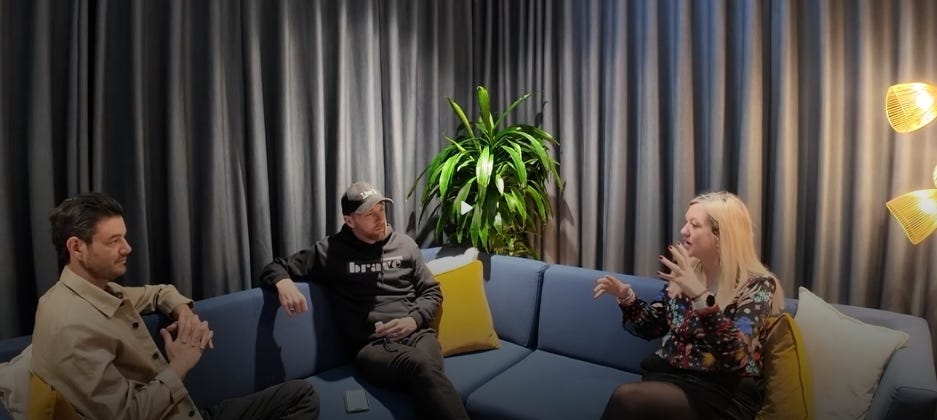
In this episode of Brave Ideas, Caleb Parker is joined by Sophie Turnbull, Chief Revenue Officer at Orega, along with Cohost, Eyal Lasker, CEO of Flexspace AI.
Sophie has been in the flexible office industry for nearly two decades, and you can hear it in the way she talks about the business.
She started at The Instant Group back in 2008, when this industry was still a much smaller world, and has since worked across several different operator brands, including Work.Life, Huckletree, and now Orega.
That gives her a pretty unique perspective.
She has seen the broker side, the operator side, the community-led brands, the design-led brands, and the more traditional serviced office side. So when Sophie talks about what actually makes a flex business work, it is not theory. It is based on years of being close to the customer, close to the sales team, and close to the operational detail.
One of the points that really stood out in this conversation is how much valuable customer intelligence sits with the frontline team.
The people at reception.
The people walking the floors.
The people speaking with customers every day.
The people who hear the passing comments in the kitchen, the corridor, or the lift.
Often, they know when a customer is happy, frustrated, growing, shrinking, or quietly thinking about leaving long before that shows up in a renewal report.
And that is where this conversation gets really interesting.
Because if operators are serious about reducing churn, improving retention, and making better commercial decisions, they need to find better ways to capture that insight and bring it into the business.
We also talk about customer fit, pipeline discipline, broker relationships, sales training, product knowledge, and why operators need to stop treating customers as just a number in an office.
This episode is a practical look at how frontline insight, commercial discipline, and better account management can help operators build stronger, more resilient flexible workspace businesses.
🎧 To listen as a podcast FOR FREE switch to audio above,
or follow Brave Ideas on Apple, Spotify, or wherever you listen.
What You’ll Learn in This Episode
Why frontline teams may hold some of the most valuable customer data in a flex operation
How informal conversations in kitchens, corridors, lifts, and reception areas can reveal renewal risk
Why operators need better systems for capturing customer intelligence before it disappears
How frontline feedback can support account management, retention, and churn prevention
Why renewal conversations should happen throughout the customer lifecycle, not just at renewal stage
How customer fit affects retention, pricing power, and long term revenue quality
Why operators need to understand when a customer is worth retaining, and when churn may be the right outcome
How sales teams can improve conversion by knowing the product, brand, inventory, facilities, and competition in detail
Why pipeline discipline matters when making pricing, renewal, and churn decisions
How brokers can add value when they understand the operator’s product and customer profile
Why direct leads and broker led leads require different commercial thinking
How operators can turn customer insight into better pricing, better service, and stronger retention
Why investing in people remains one of the most practical ways to improve operator performance
Key Takeaways for Operators
Your frontline team may know about churn before your reports do.
Sophie makes the point that front of house and centre teams often hear what leadership does not. They hear complaints, frustrations, positive feedback, expansion signals, and small comments that reveal whether a customer is happy, disengaged, or at risk.The problem is not just collecting data, it is capturing what people already know.
Many operators already have valuable customer intelligence inside the business, but it sits in people’s heads, informal conversations, spreadsheets, decks, and scattered notes. The challenge is turning that into something the business can actually use.Retention starts before the renewal conversation.
Sophie is clear that customers often remember the most recent part of the relationship when renewal time comes. That means operators need to listen, communicate, and act throughout the customer lifecycle, not only when a contract is about to expire.Churn prevention depends on account management, not last minute discounting.
If a customer is unhappy, operators need to understand why early enough to solve it. Sometimes the answer is better communication, sometimes it is a service fix, sometimes it is a product adjustment, and sometimes it is a more suitable office configuration.Customers should not be treated as numbers in offices.
Sophie warns against looking at yield management purely through the lens of office size and revenue. Operators need to understand the business behind the customer, how they use the space, what value they bring, and whether there is a better solution that works for both sides.The best sales teams know the product in detail.
Sales teams need to know more than pricing and availability. They need to understand the brand, the building, the inventory, IT, amenities, facilities, and what can physically be changed inside the space. That level of preparation makes customer and broker conversations more effective.Training is not a soft cost, it is a commercial lever.
Sophie argues that operators often fail to educate their teams properly when launching new products, processes, or ways of working. Better training creates more confident teams, better customer conversations, and stronger conversion.Pipeline discipline gives operators confidence.
Understanding lead flow, tour conversion, warm prospects, blockers, and decision timelines helps operators make better decisions on pricing and retention. Without that visibility, operators risk making renewal decisions in the dark.Broker relationships need clarity and mutual value.
Sophie sees real value in the broker channel, but only when brokers understand the product, are given the right information, and help customers make better decisions. Operators also need to be clear on fees, expectations, and the true cost of acquisition.
Key Takeaways for Real Estate Investors and Landlords
Frontline intelligence should be part of asset management.
Landlords and investors should not only ask for occupancy, revenue, and pipeline reports. They should also ask how operators capture customer sentiment, service issues, renewal risk, expansion demand, and informal feedback from the teams closest to customers.Churn risk is often visible before it becomes financial.
A customer rarely leaves without signals. Complaints, reduced engagement, changed utilisation, pricing concerns, service frustrations, and expansion or contraction needs can often be spotted early if the operator has the right feedback loops.Operator quality shows up in the account management system.
A strong operator does not wait for renewal dates. They manage relationships continuously, understand each customer’s business, track risk, and use customer intelligence to make better commercial decisions.People are part of the operating platform.
In flexible workspace, the team is not separate from the product. The frontline team shapes the customer experience, the sales team shapes conversion, and the account management team shapes retention. Weak teams can undermine strong real estate.Data strategy should include human data.
Dashboards matter, but they do not capture everything. Some of the most valuable insights come from conversations, service moments, and day to day interactions. The opportunity is to combine operational data with human intelligence.Sales enablement affects asset performance.
If the sales team does not understand the product, inventory, customer profile, and competitive context, the asset will leak revenue. Better training can improve conversion, protect rate, and reduce avoidable friction in the sales process.Brand clarity improves customer fit.
Sophie is clear that operators need to know who their product is for. That matters for landlords and investors because better customer fit can improve retention, reduce churn risk, and support stronger pricing discipline.Churn is not always bad, but unmanaged churn is.
There are cases where a customer may not be the right fit, or where the economics no longer work. The key is making that decision deliberately, with visibility on replacement demand, acquisition cost, void risk, and long term value.
Behind The Scenes
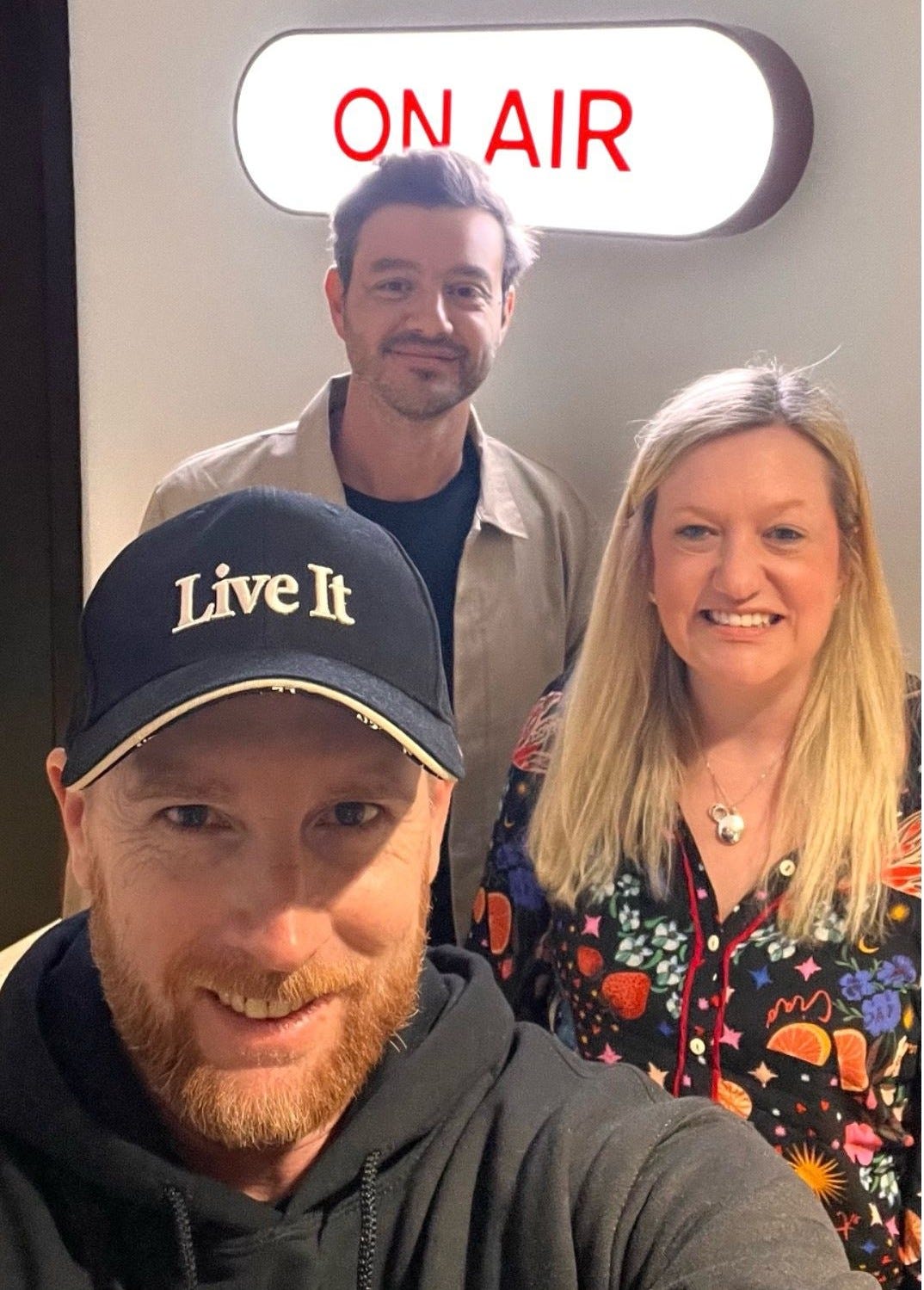
We want to give a special shoutout to Nat and the team at Work.Life, where this episode was recorded, for their brilliant podcast studio and hospitality throughout the season. Tap here to book their podcast studio yourself!
Season 17 of Brave Ideas explores one of the most important questions in office real estate today, how to build a more profitable flex business. Across the season, Caleb Parker speaks with industry leaders about the real commercial drivers behind Space-as-a-Service.


