



It feels like every other conversation eventually finds its way back to AI at the moment.
Just about every conference panel, every article, every LinkedIn post seems to be asking some version of the same question – how are you using it? – or answering that question with an evangelical promise that it’s about to transform everything.
At times, our relationship with AI feels a little like sitting in the front row of an IMAX cinema wearing 3D glasses. It’s everywhere, all at once, and everyone is scrambling to get hold of it.
That isn’t necessarily a bad thing.
New technology should absolutely generate excitement and challenge established ways of working and make us question what can be done better.
The problem comes when enthusiasm overtakes scrutiny.
That’s when businesses sometimes jump straight to implementation (often via a one-size-fits all solution) before properly identifying what problem they’re actually trying to solve.
Don’t be a dinosaur
As MetSpace’s leadership team, we bring together almost a century of experience in commercial property. We’ve seen trends arrive, grow and fade. We’ve watched technology transform how businesses operate. And yes, we’ve adopted plenty of it ourselves.
So let’s be clear: this isn’t a call to resist AI or pretend it can’t be useful.
The businesses that refuse to evolve rarely stay competitive for long.
Remaining open to new ideas, new technologies and better ways of doing things is essential. If a new tool helps improve service, increase efficiency or create a better client experience, it deserves serious consideration.
Better service improves retention.
Greater efficiency improves margins.
If technology helps us achieve both, that’s a conversation worth having.
But in our experience, the most effective response to any trend is to take a sideways step.
Pause.
Understand the problem first.
Then decide where the technology can create genuine value.
Don’t break what already works in the pursuit of efficiency
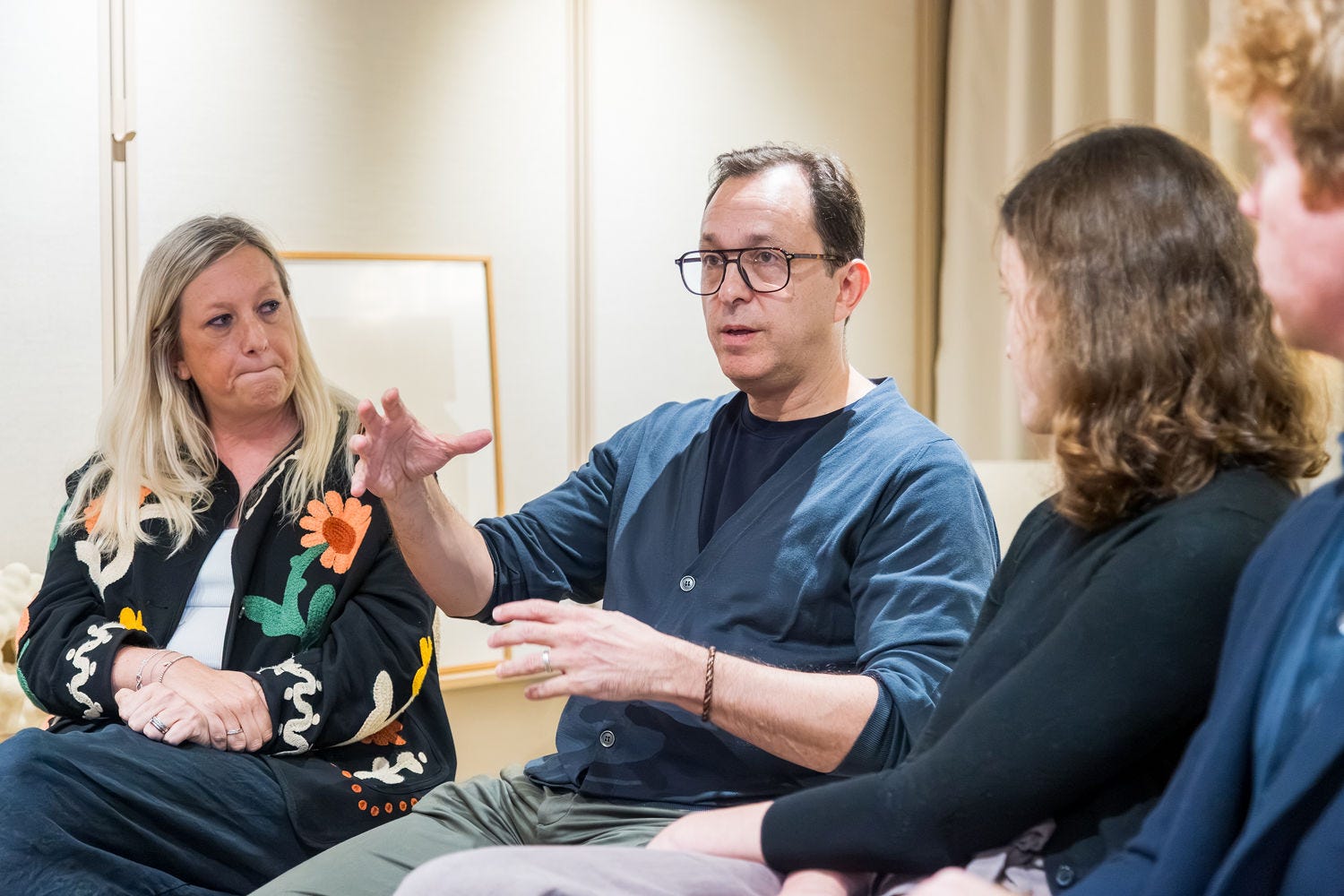
I recently had a great discussion on a Brave Ideas panel where operators were talking about AI agents handling enquiries and client interactions.
One particularly interesting thread was about how some had already started scaling this approach back. They had discovered something many relationship-led businesses already know – communication and connection are not the same thing.
Brené Brown talks about this distinction well.
Communication is the mechanism, connection is the experience.
AI may help facilitate communication, but genuine connection, trust, empathy and understanding are considerably harder to automate.
Property, certainly our corner of it, remains a people business.
One of the risks in the current AI gold rush is that businesses become so focused on what technology can do that they overlook what’s already working. Client relationships should not become collateral damage in the pursuit of efficiency.
That’s not to say AI cannot indirectly support those relationships, but too many discussions seem to assume that if something can be automated, it should be automated. I’m not convinced that’s always true.
The most valuable parts of our industry are often the most human parts: empathy, trust, experience, knowing when to challenge a client and knowing when to listen.
Focus on what’s behind the curtain
With that in mind, we’ve taken a slightly different approach.
Rather than introducing AI at every client touchpoint, we’ve been exploring how it can improve what happens behind the scenes. We’ve developed a proprietary platform to help accelerate the creation of internal systems and operational tools.
If administrative tasks take less time, our team has more time to spend with occupiers. If internal systems and maintenance logs become more efficient, issues can be resolved more quickly. If workflows become simpler, service improves.
That’s where I think some businesses are looking in the wrong place.
The most valuable use of AI may be the AI the client never sees. I’ve never had an occupier tell me they chose an office because their operator was using AI. They care about whether the WiFi works, whether issues are resolved quickly, whether communication is clear and whether they can get on with running their business.
In that sense, AI’s role is largely invisible. It isn’t seen, but it is absolutely felt. The technology sits behind the curtain while the client experiences the outcome.
As things stand today, AI still can’t paint a wall. It can’t change a lightbulb and it certainly can’t build a genuine relationship. What it can do is help businesses become more efficient behind the scenes, allowing people to spend more time focused on the things that matter most, and the things AI simply isn’t built for.
AI is still learning
Part of the challenge is that AI is still maturing. We’re often talking about it as though it has already reached its final form, when it’s actually quite far from it. Hence, I’ve started thinking of AI less as a seasoned professional and more as an apprentice. One that you give responsibility too gradually, as you understand strengths and recognise limitations.
AI has enormous potential for operators who take a sidestep – who resist instant implementation and hype, who focus on outcomes and solve real problems. In an industry like ours (built on trust and relationships) I don’t think that the goal should be to replace the human element.
We should focus on how we can use technology to strengthen it.
