


The startup was early, but the demand behind it was real. What has changed is that the capital markets are now starting to care about some of the same things occupiers wanted back then.
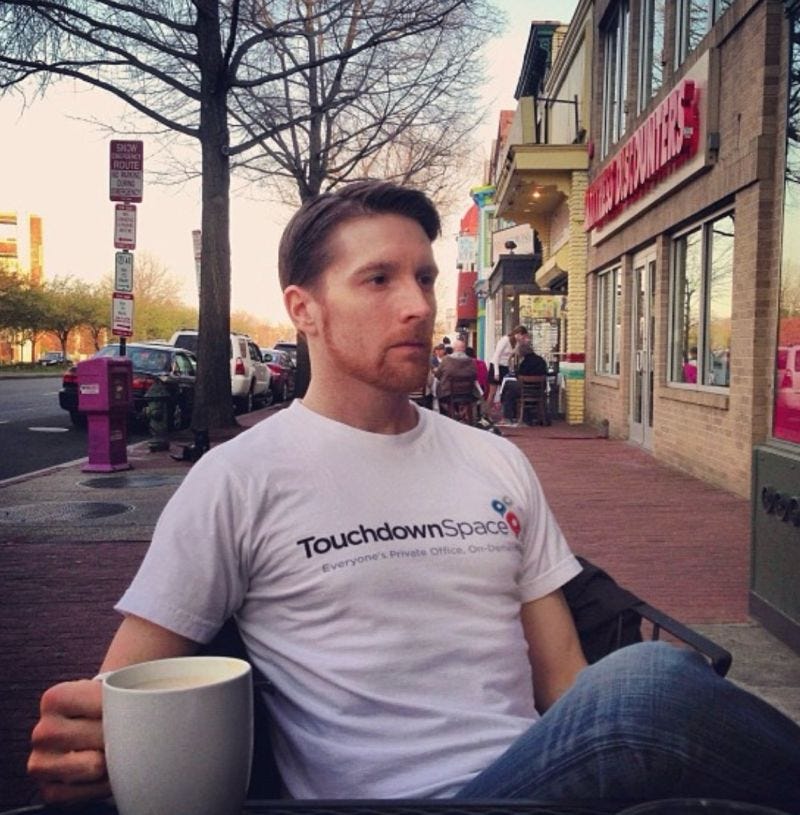
In 2013, I was the cofounder and CEO of TouchdownSpace, a startup built on a simple idea: accessing professional office space should be far easier.
Our tagline was, “everyone’s private office, on demand.”
What sat underneath that was a broader belief that offices should work more like hotels, easy to access, easy to book, and run with hospitality in mind.
At the time, that idea felt early, and to many in the market it looked niche.
Looking back, the more important point is not the startup itself. It is the demand signal behind it.
What looked like a product idea then now looks more like an early signal of how office may need to perform in a market where investors are placing greater weight on income durability, customer demand, and operating quality, rather than relying on exit assumptions to do most of the work.
That is why this story matters now.
The Signal Was About More Than Access, It Was About Asset Performance

Even then, users were signalling something important.
They wanted professional space without the friction of traditional leasing. They wanted privacy without long-term commitment. They wanted convenience, immediacy, and a better experience.
In simple terms, they wanted office space to behave less like a static real estate product and more like a service.
That matters because once office starts to be experienced as a service rather than simply occupied as space, the implications go beyond user experience.
The product changes.
The operating model changes.
And over time, the quality and durability of the income stream can change too.
What first appears to be a customer preference can eventually become an underwriting issue.
Why Prior Cycles Did Not Need to Underwrite This Properly
For much of the previous cycle, many real estate strategies could still rely heavily on exit assumptions and cap rate compression.
In that environment, operational weakness was easier to hide.
A building did not always need to be especially differentiated, customer-centric, or well run for the numbers to work. Market movement could do much of the heavy lifting.
That was one reason service-led and hospitality-led office concepts were often dismissed as niche, operationally messy, or difficult to scale.
The customer demand may have been real, but the capital stack did not yet need to fully recognise it.
In other words, the market was not ignoring the signal because it did not exist. It was ignoring it because prior underwriting frameworks did not need to price it accurately.
Zoom Out Beyond One Cycle
To understand where office may be heading, it helps to zoom out beyond the last cycle.
