


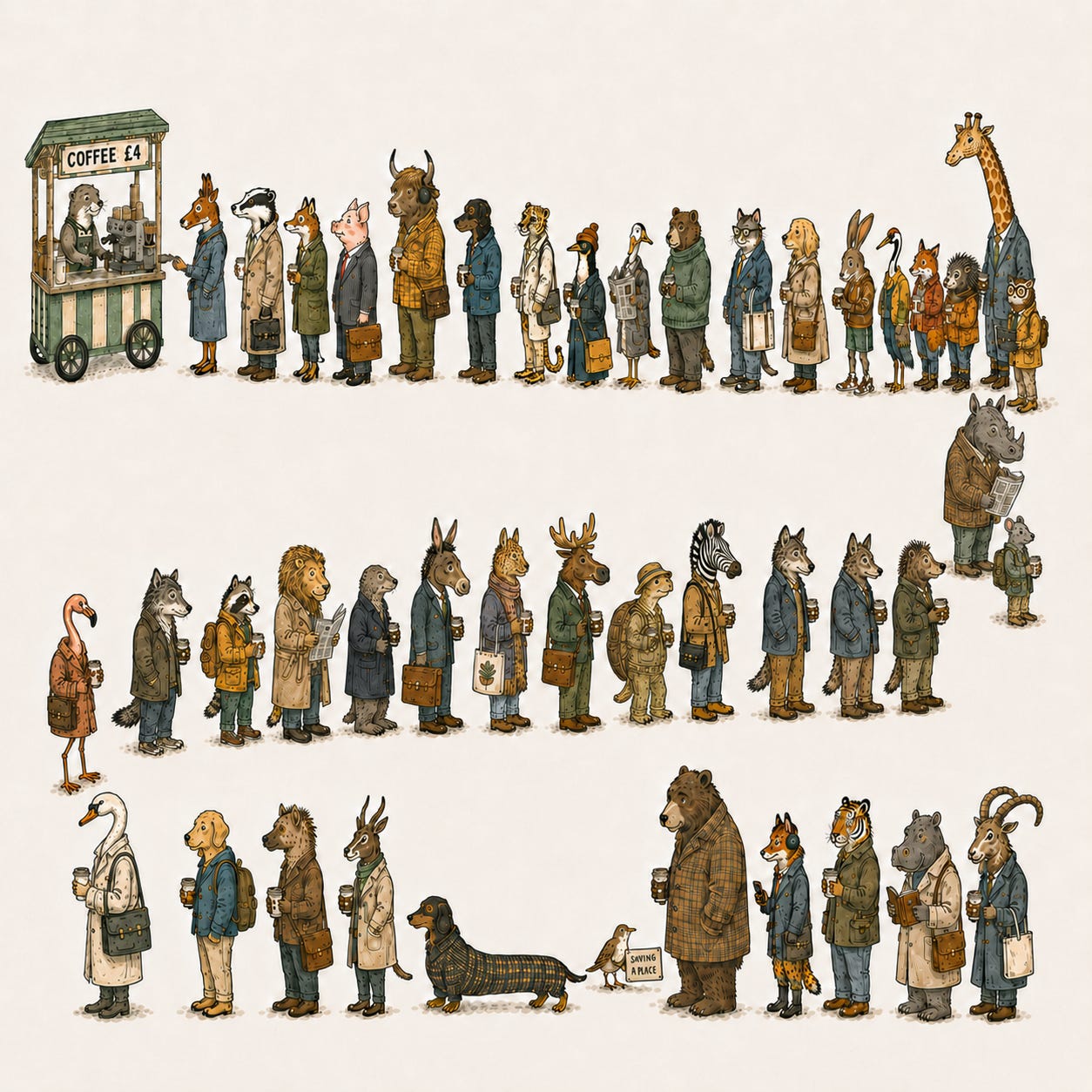
It is 8:30 in the morning and the coffee shop is already losing its mind.
The grinder is screaming like it owes someone money.
Milk hisses under the steam wand.
Cups knock against saucers.
A barista no older than twenty-two works a row of drinks with the concentration lines of someone forty years their senior carved into their brow, not once looking up.
Flat white. Oat latte. Two Americanos.
Something iced with enough modifications it needs its own project manager and probably a lawyer
Why is everything matcha something now ?
The queue keeps moving. Nobody in it is thinking about margin.
You reach the till. The screen turns towards you.
£4.20.
You tap your card. That’s it.
No sharp intake of breath.
No polite request for an itemised breakdown.
Nobody gestures at the empty two-top in the corner and argues the place should be cheaper because it’s clearly not at capacity.
You pay four pounds twenty for hot water, milk and some ground-up beans in a paper cup, and then, because you’re already committed, you add a pastry. Whole transaction is over before the milk’s finished sitting on your top lip. You walk out eight quid lighter and, bizarrely, pleased with yourself.
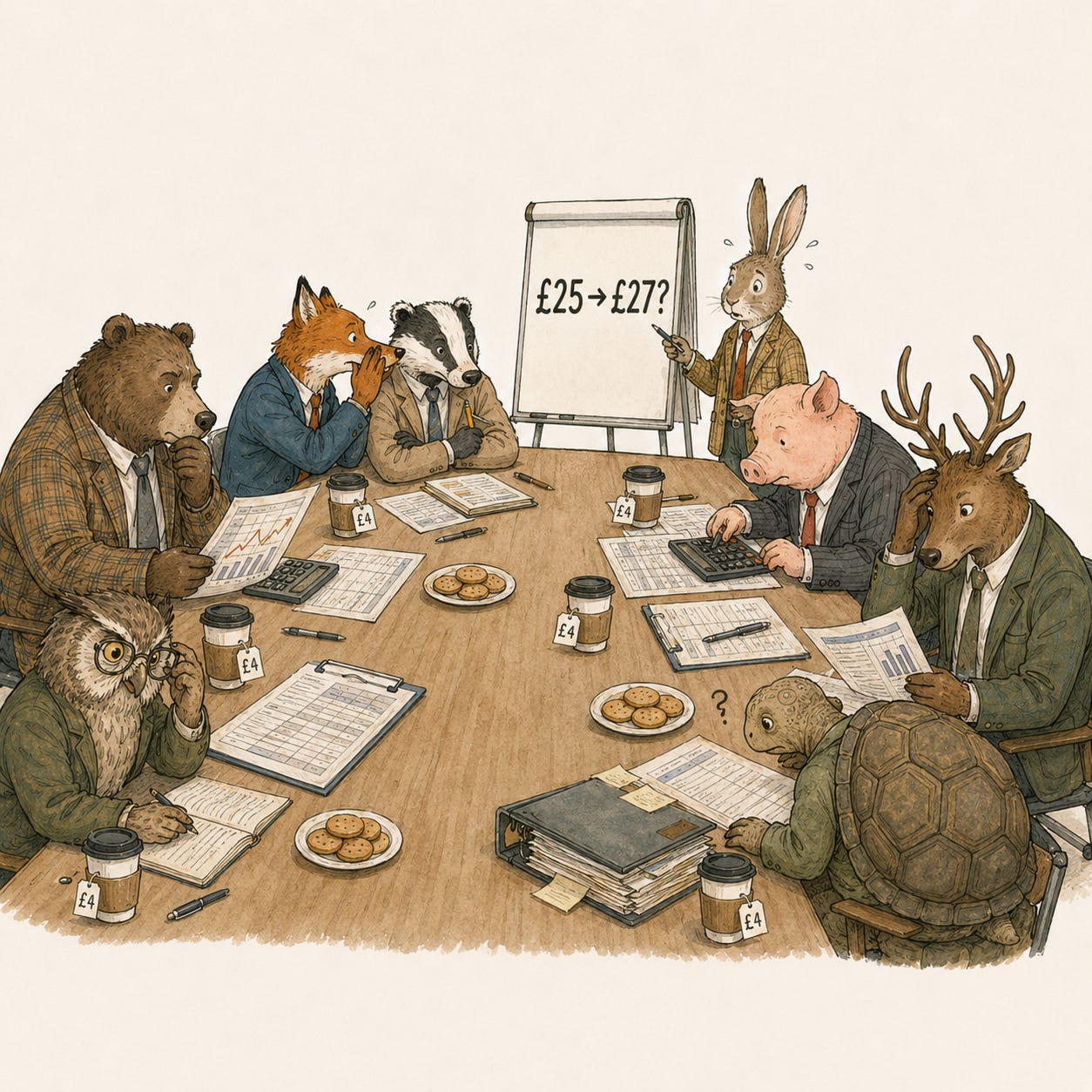
Meanwhile, across town, a flex operator is trying to move a day pass from £25 to £27, and it has become a whole thing.
There have been meetings about this.
Actual meetings, with an agenda, about two pounds.
A spreadsheet has been built and rebuilt.
Someone’s worried about the competitor down the road.
Someone else is convinced the members will riot.
The location team flags that Wednesdays are heaving but Fridays are dead, so maybe the price should just... not really go up, not properly, not yet.
Before a single customer has said one word, the business has started negotiating against itself, out loud, in a Teams call that could have been an email.
Maybe it goes up gradually. Maybe existing customers get grandfathered in forever. Maybe there’s a launch offer to soften a price rise nobody’s actually announced. Maybe 20 per cent off Mondays and Fridays, because nothing says “confident premium product” like discounting the days nobody wants it anyway.
The barista did none of this. The barista told you the price once, looked you dead in the eye, and moved on to the next order because there were nine people behind you and the milk doesn’t steam itself.
That’s the £4 coffee problem. And I’ve watched flex talk itself into it for years now.
Flex has convinced itself people buy workspace the way an actuary buys life insurance:
Square footage against Wi-Fi speed against what the place down the road is charging, all weighed up on a little mental spreadsheet before anyone commits.
Coffee shops know better.
They know almost nobody buys anything that way, not really, not with the part of the brain that’s actually doing the deciding.
Nobody at that till is pricing the wholesale bean cost or benchmarking the rent per square foot against the unit next door.
They’re buying the smell that hits them at the door.
The noise of the machine.
The ten minutes of nothing between the school run and the first Zoom call.
They’re buying the small, stupid ceremony of someone making a thing specifically for them, right now, with their name half-remembered on the cup.
The coffee’s just the vessel the whole feeling arrives in.
Good cafés know this in their bones even if they’d never say it out loud over a flat white. They stage the value before you’ve paid for it. You see the machine, all chrome and pressure gauges, doing something that looks vaguely like engineering. You watch someone weigh the shot, tamp it, time it, pour the milk into something resembling a fern because apparently that still matters to people. The pastries sit under warm light like they’re auditioning for a gallery. By the time the number hits the screen, the case has already been made. Nobody needed convincing at the till because they’d been convinced the second they walked in.
Flex, by and large, does the opposite.
We take something built out of expensive real estate, commercial-grade fibre, furniture, heating, cleaning, design, insurance and the unglamorous daily labour of people keeping the whole operation from falling over, and we describe it as “a desk for the day.”
We hide the experience. We advertise the inventory.
One desk. One chair. Wi-Fi included.
Then we act baffled when £25 feels like a lot for that.
No restaurant on earth sells dinner as “access to a table for two hours, food included.” No hotel leads with the thread count. The café isn’t selling you temporary custody of a ceramic mug.
But flex, God love it, is still out here selling furniture like it’s the whole pitch.
And when the customer so much as hesitates, we reach straight for the discount, because it’s the easiest lever in the building. It asks nothing of us. You don’t have to sharpen the story, improve the product or explain, with any conviction, why the thing is worth what it costs. You just make the number smaller and hope the silence that follows means relief instead of confirmation that they were right to push.
It works.
Once.
Then the discounted price quietly becomes the real price, the offer that was meant to be temporary calcifies into policy, and the customer who’ll pay £4.20 without blinking for a coffee is on the phone asking if the meeting room rate has “any flex in it,” because we taught them, ourselves, with our own hands, that it probably does.
There’s something almost impressive about how fast this industry folds.
The customer asks for a price.
We hand back the price, a bullet list of everything included, and a discount we invented while typing the email, unprompted, like a hostage negotiator working against himself.
Coffee shops don’t carry this particular crisis of confidence.
They know full well not everyone walking past is going to buy from them, and they get on with the morning anyway. There is, almost always, cheaper coffee somewhere nearby. Sometimes it’s free, sitting in a pot in someone’s office kitchen. The queue doesn’t care. The queue keeps forming.
Price matters, obviously, I’m not naive about this.
There’s a ceiling, and no amount of exposed brick or a hand-drawn chalkboard font is going to turn bad coffee into good coffee, or a miserable meeting room into a nice one. But people aren’t out there hunting relentlessly for the single lowest number on the market. They’re hunting for something that feels worth what it costs. That’s a different hunt entirely, and it’s the one flex keeps losing by accident.
Cutting the price can make a product cheaper. It cannot, under any circumstances, make it more valuable.
Those are not the same lever, and treating them like they are is how you end up managing a spreadsheet full of concessions instead of a business.
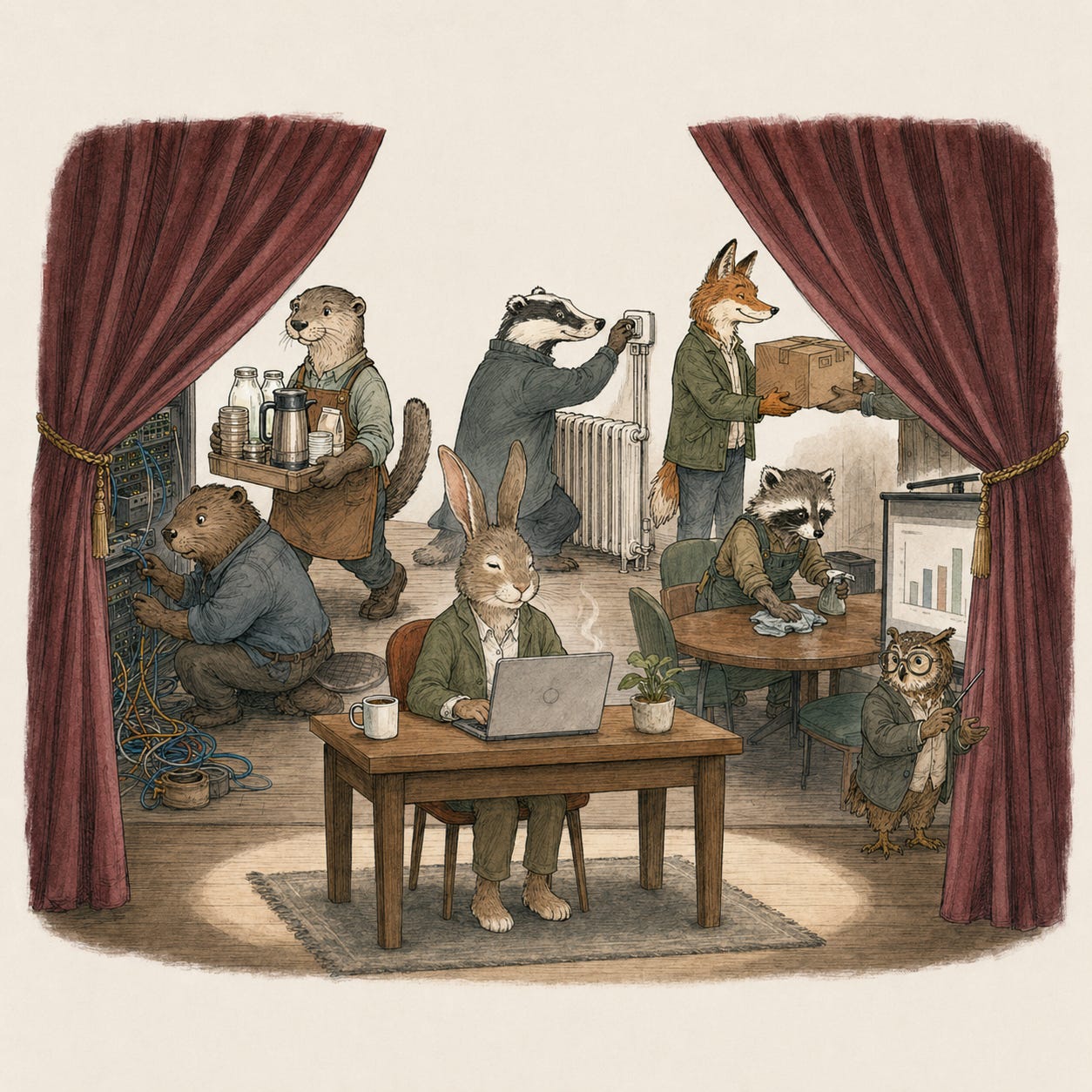
Flex should spend a lot less time asking whether £27 is too much, and a lot more time asking what the customer actually sees in the ninety seconds before they’re asked to pay it.
Do they see a desk, or somewhere they can finally get a proper day’s work done without three interruptions an hour?
Do they see a meeting room, or somewhere they can bring a client without silently apologising for the carpet?
Do they see “Wi-Fi and coffee included” on a feature list, or a day where someone else has already dealt with the heating, the cleaning, the deliveries, the cables, the milk, and the hundred other small irritations of trying to work somewhere that isn’t your own kitchen table?
If the value only lives in our heads, it doesn’t exist.
Full stop.
That’s not cynicism, that’s just how customers work.
Coffee shops have got very good at staging their value, and not in a cynical, smoke-and-mirrors way either. The grinder’s real. The skill’s real. The room genuinely matters to how the coffee tastes, even if nobody could tell you why. Every part of the experience reinforces the price until handing over £4 stops feeling like a financial decision and starts feeling like the obvious, natural end of standing in that queue.
Flex doesn’t need to copy the chalkboards, the hanging plants, or the solemn little paragraph about ethically sourced beans. We have more than enough of that already, thanks.
What it needs is the nerve to understand what it’s actually selling.
Not the desk.
Not the chair.
Not eight hours of building access with a fob code.
It’s selling a day that works.
A door that’s already open.
A room that’s ready before you walk in.
Internet that doesn’t require a phone call to IT.
Coffee you didn’t have to make yourself.
People around when you want them, and quiet when you don’t.
That’s worth considerably more than the furniture sitting on the floor.
It’s about time flex started pricing like it believed that.
The £4 coffee isn’t overpriced.
The £25 workspace is just badly explained.
I really enjoyed reading this, and I totally agree. Even when coffee is more than £4, we soak in the experience, and see it as valuable.
I was taught a long time ago to not describe anything I sold as having a “cost”. It’s a “fee”, because a cost implies the customer is losing something when they buy. When actually they are gaining so much from my services, as they are from a great flex space. They are investing in an experience, which is how people see their coffee
Solid piece 👌