


Firstly, Convene’s marketing team: Take a bow
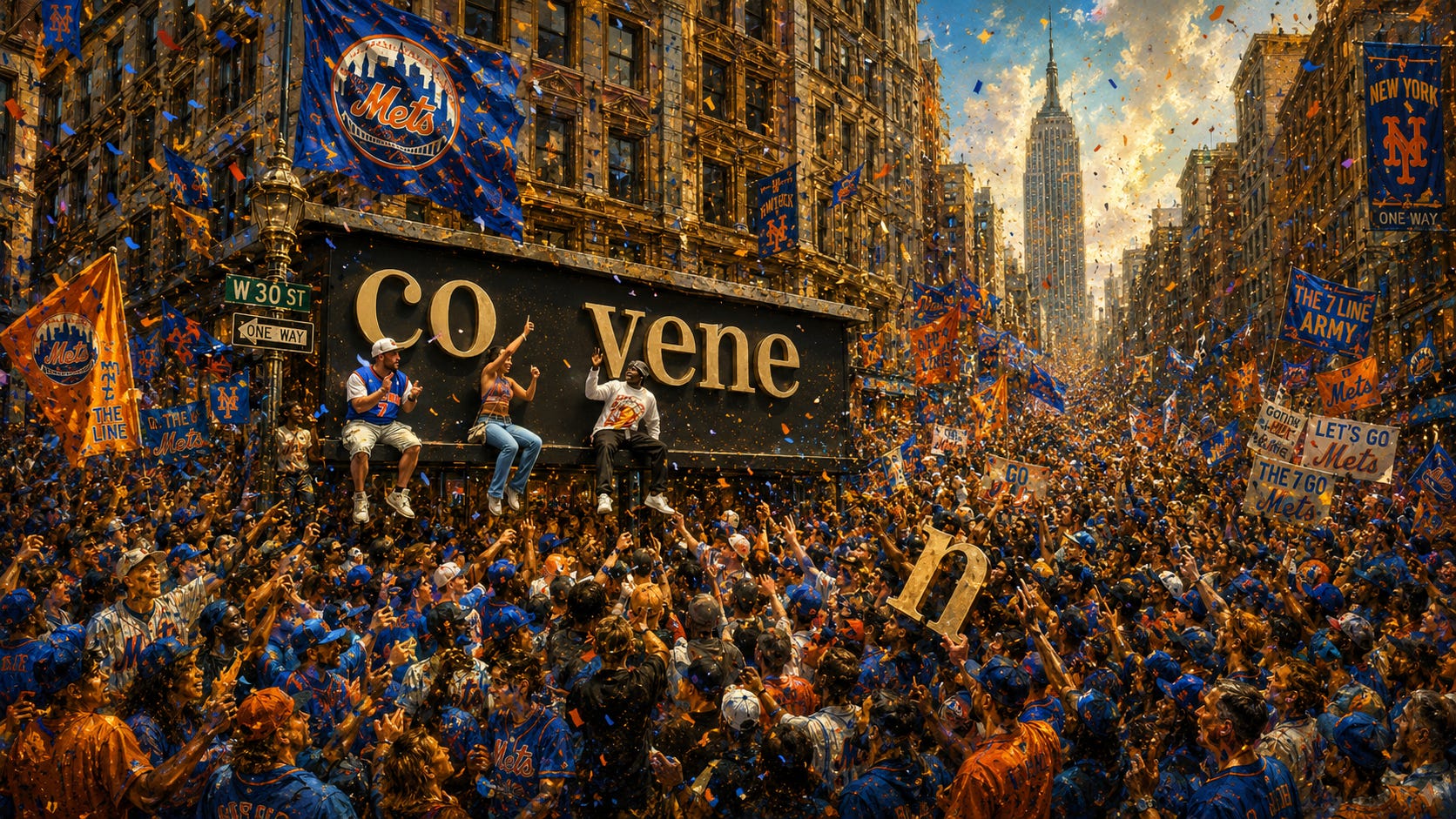
The Knicks won the title.
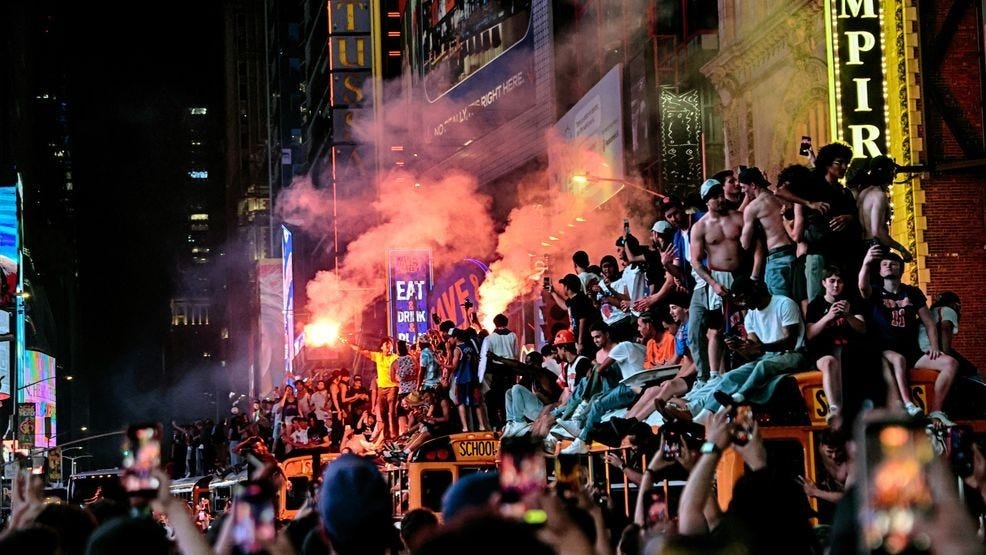
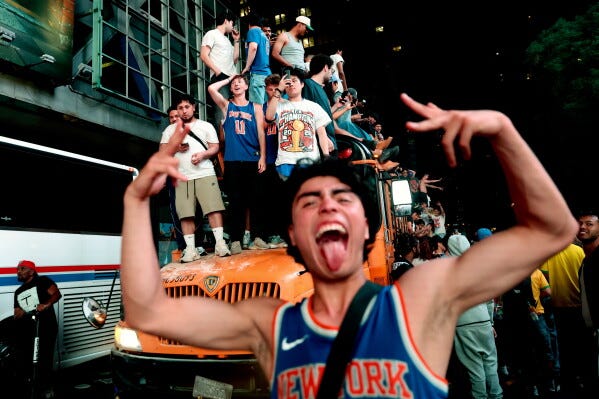
First in fifty-three years. And New York celebrated the way it always does, which is to say it poured into the street and climbed anything that would take the weight. Bus shelters, scaffolding, traffic lights. Edges turned into balconies. Signage turned into part of the night.
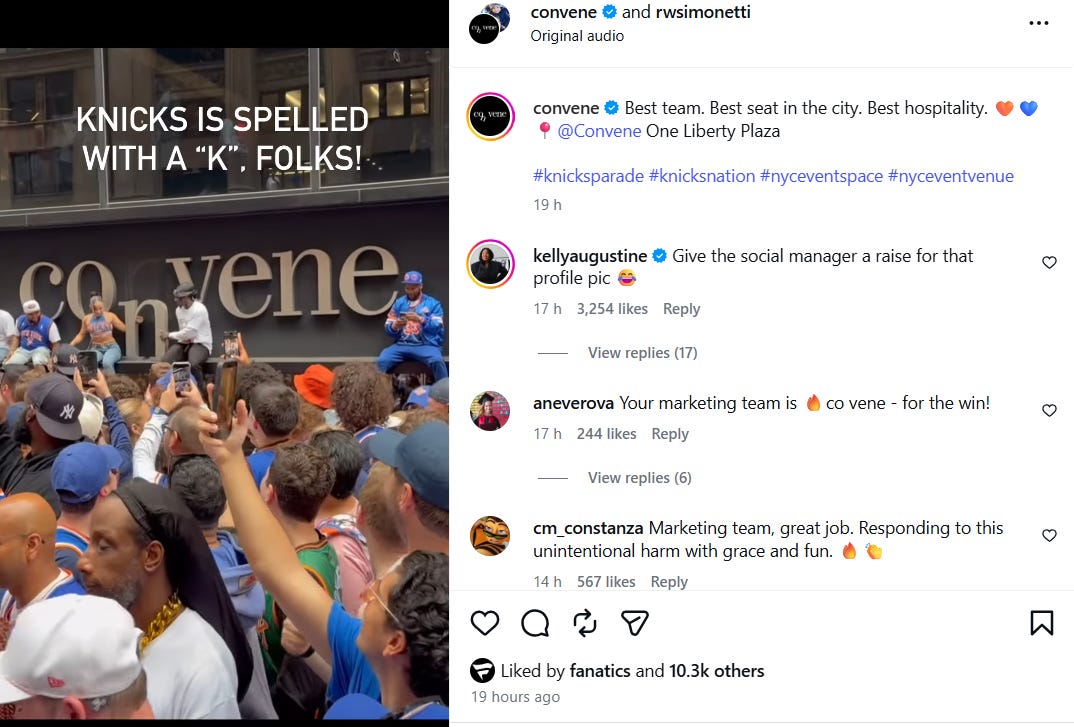
Outside Convene at One Liberty Plaza, the sign took a hit.
A letter came off.
The N.
For a moment Convene wasn’t a hospitality brand with a clean sign on the wall. It was part of the street. Not the backdrop to it, not the sponsor of it. Part of it.
That’s what made me stop scrolling and sit forward.
Not because damage is good, or because anyone should be hauling themselves up onto a building’s signage, or because chaos makes a marketing plan. It was that every so often a brand gets dragged out of the controlled room it built for itself and into something real, and you get to see what it’s actually made of.
And most brands are terrified of that.
They spend money trying to look lived-in, but panic the second life actually touches them. They want the atmosphere, but not the fingerprints. They want culture, but only once it has been approved, edited, captioned and resized for Instagram.
Convene did the smart thing.
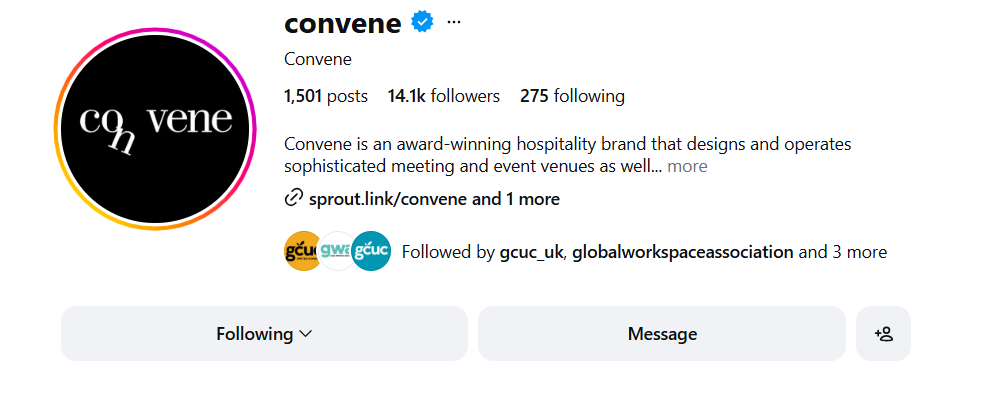
They did not pretend it had not happened.
They did not bury it under a corporate statement about safety and repair works.
They folded the moment back into the brand.
They let the broken sign become the story.
That matters.
Because the best brand moments are not always the ones you planned.
Brand Authenticity
A few years ago, Shohei Ohtani hit a foul ball at Citi Field and damaged a Coors Light LED ad. The screen was displaying a can. The ball killed a section of pixels and left a black square sitting awkwardly on the image.
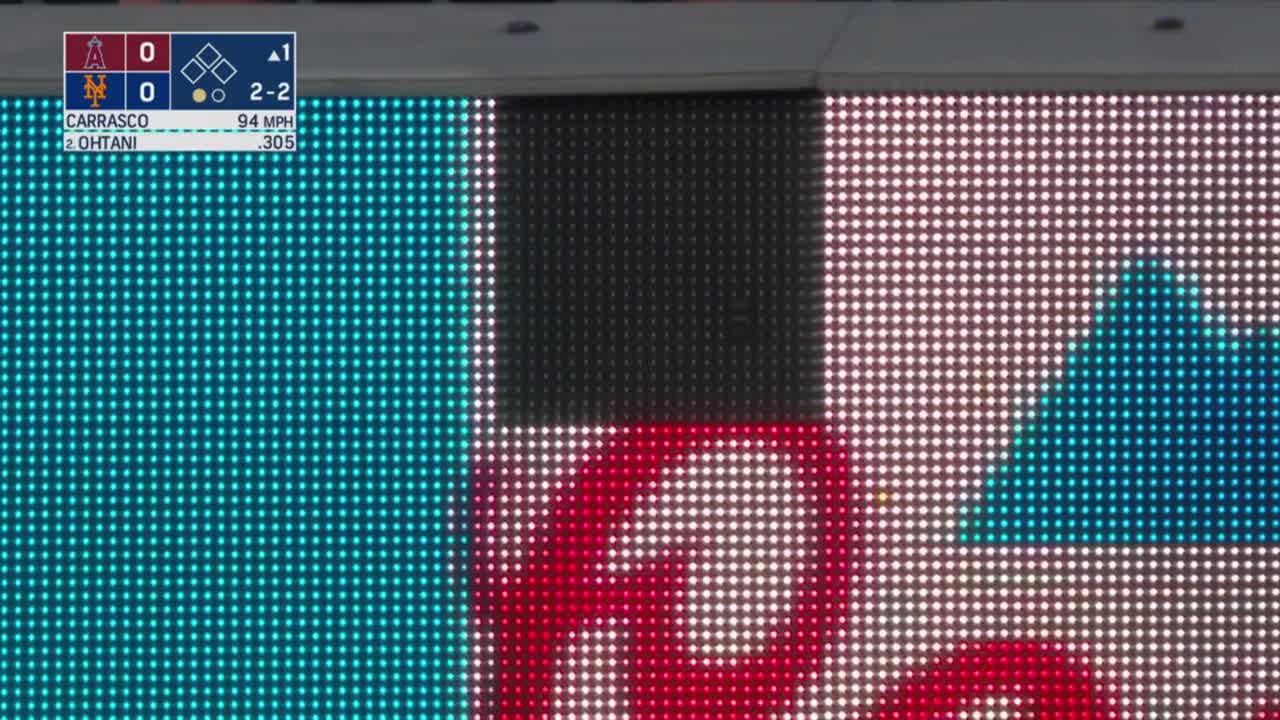
Most brands would have fixed it quietly.
Coors Light made it the campaign.
They took the damaged pixels and put them onto cans, billboards and the wider creative. The flaw became the asset. The broken bit became the proof that something had happened. No apology. No quiet repair. It worked because it understood something most brands forget.
A scar is often more interesting than polish.

The same thing happened with the Convene sign.
The missing letter was not the point. The point was that the brand had been caught in the path of actual public energy.
That is rare now.
Most hospitality and workspace brands are built to look like life happens there, while being carefully protected from the full force of it. We create warm lighting, curated playlists, plants, coffee spaces , event programmes, community language and photography of people laughing at laptops. Then we try to control every possible variable around how that life appears.
Nothing too messy. Nothing too weird. Nothing too honest. Nothing that might make the building look like it has been used by actual humans.
But cities do not work like that.
Neither does culture.
Culture is not a campaign calendar.
It is not a launch plan. It does not care about your brand guidelines. It spills over, stains things, changes the meaning of objects, gives places nicknames, turns corners into meeting points and makes certain rooms matter for reasons the operator never predicted.
The Convene sign became memorable because, for a few hours, it stopped belonging entirely to Convene.
It belonged to the city.
That is the uncomfortable part for brands.
The moment something becomes culturally useful, you do not fully own it anymore. People touch it. Rename it. Misuse it. Mock it. Celebrate around it. Build a story on top of it.
That loss of control is frightening.
It is also where the good stuff lives.
The flex industry should pay attention to this.
We talk endlessly about community, but often what we really mean is managed engagement. We want the warmth of belonging without the unpredictability of people. We want activation, but not interruption. We want members to feel ownership, but not so much ownership that they change the place.
That is a weak version of community.
Real community leaves evidence.
It moves chairs. It fills corners you did not programme. It makes one table more important than the rest. It turns a coffee machine into a gossip point. It turns a roof terrace into a ritual. It creates habits you did not design. It gives a room a name that is better than the one on your floorplan.
And yes, sometimes it scuffs the paintwork.
There is a version of flex that would see the Convene moment and only think about facilities. Repair costs. Liability. Brand consistency. Risk assessment. The sign needs fixing. The photo needs removing. The messaging needs controlling.
Fine.
All of that exists.
Nobody sensible is saying ignore the operational reality.
But if that is all you see, you have missed the valuable part.
Because for once, a workspace brand was not trying to insert itself into culture. Culture inserted itself into the workspace brand.
That is the gold.
The mistake would be to reduce this to reactive marketing.
Reactive marketing is usually a brand moving quickly with a topical joke. Some of it works. Most of it is just companies trying to sound like people for six minutes.
This was different.
This was physical. Public. Unplanned. A real asset being changed by a real moment, then a brand having enough confidence not to flinch.
That confidence is the lesson.
Everyone in flex wants to call themselves hospitality now. Fine. But hospitality is not just nice lighting, decent coffee, a scented lobby and someone greeting you by name.
Hospitality is tolerance.
Tolerance for noise. Tolerance for rhythm. Tolerance for people arriving in different moods. Tolerance for the fact that the best moments in a building might not be the ones on the events calendar.
Hospitality without tolerance is just styling.
And that is where a lot of flex gets stuck. It wants the aesthetic of hospitality but not the temperament. It wants the warmth, the rituals and the language, but still wants the product to remain perfectly intact.
You cannot have both.
If your space is alive, it will get marked.
That does not mean accepting damage for the sake of it. It means understanding that the marks, rituals, interruptions and strange little stories are often what make a place believable.
Nobody falls in love with a render.
Nobody remembers the generic shot of a meeting room with a carafe of water and three identical notepads.
People remember the table where something happened. The view from the place they always sat. The team member who knew their order. The event that got slightly out of hand in the right way. The sofa, the corner, the ritual, the running joke.
Brands do not become meaningful because every asset remains pristine.
They become meaningful when people can attach memory to them.
That is why the broken Coors screen worked.
That is why the Convene sign worked too.
Both had proof of life.
And proof of life is becoming more valuable than polish.
Polish is easy. You can buy polish. You can brief polish. You can render polish before the building even opens. Every operator can get the nice chairs, the soft lighting, the decent coffee, the plants, the podcast room, the wellness language and the curated community copy.
What you cannot easily buy is a place in the public imagination.
That has to be earned.
Sometimes it is earned slowly, through repeated daily usefulness. Sometimes through great service. Sometimes because your sign happens to be in the right place when the city decides to lose its mind.
That is not a strategy you can manufacture.
But you can build a brand with enough confidence to benefit when it happens.
A nervous brand protects itself from the public.
A strong brand lets the public leave a mark.
So yes, the sign needed fixing.
But for one day, it was probably better broken.