


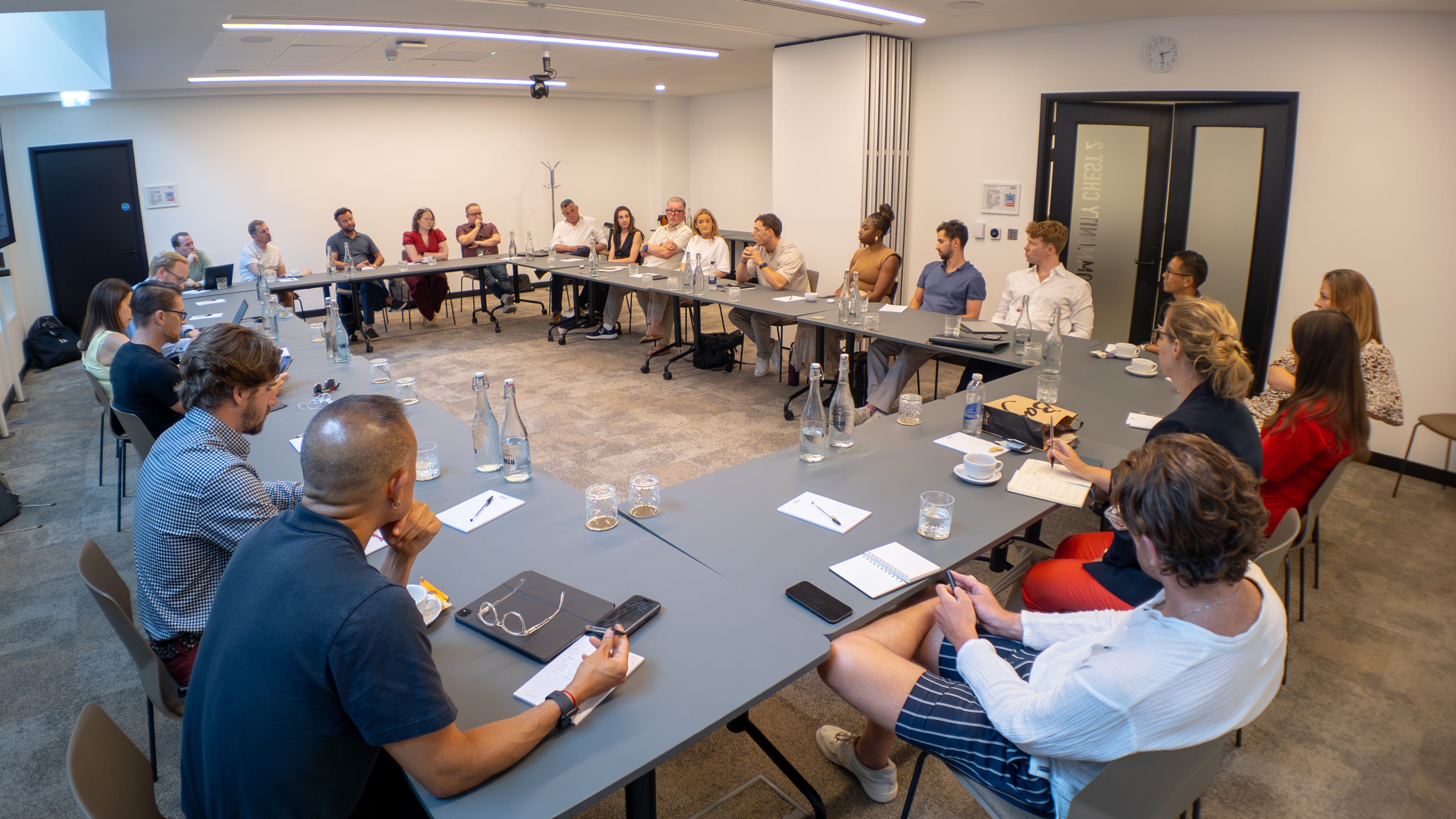
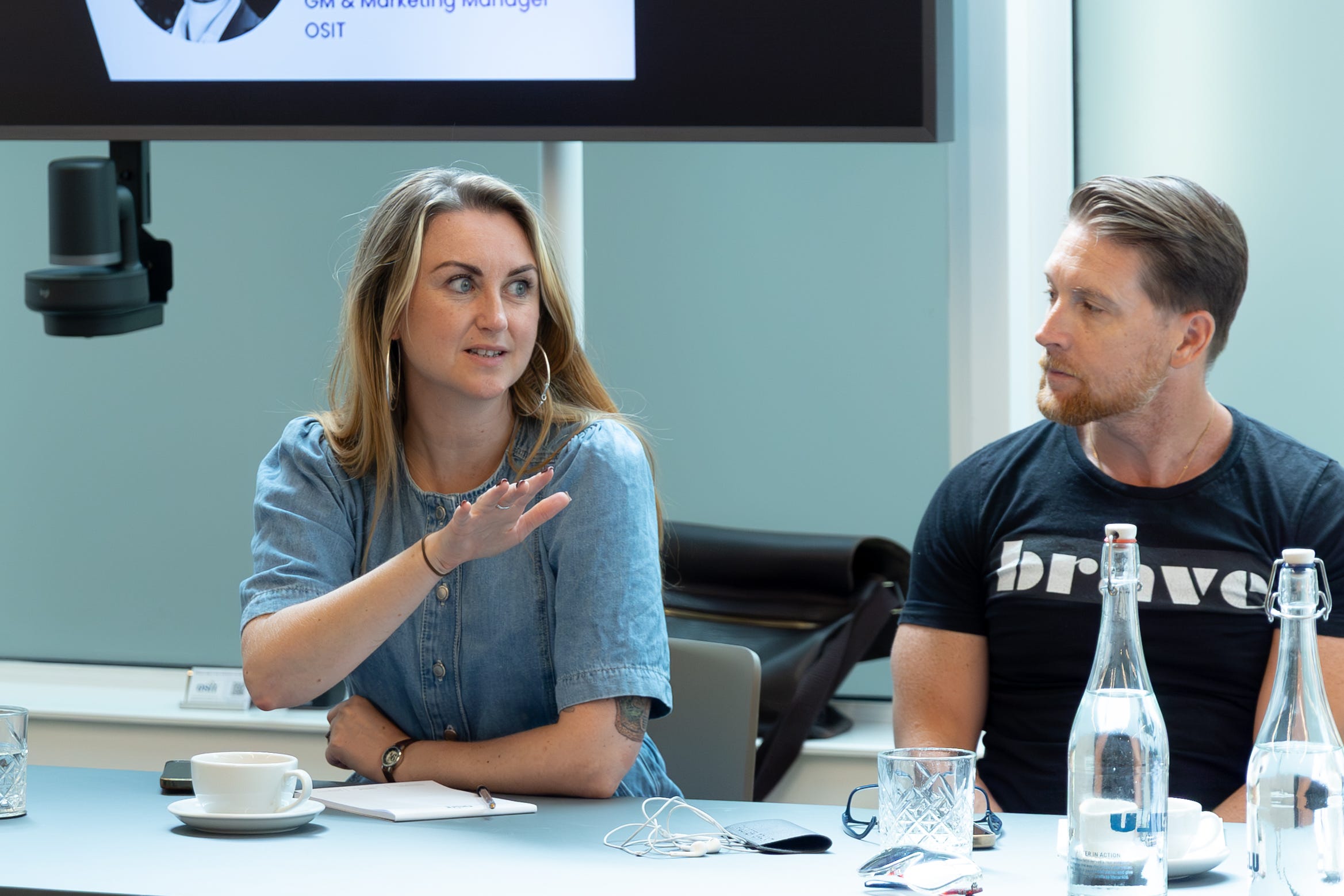
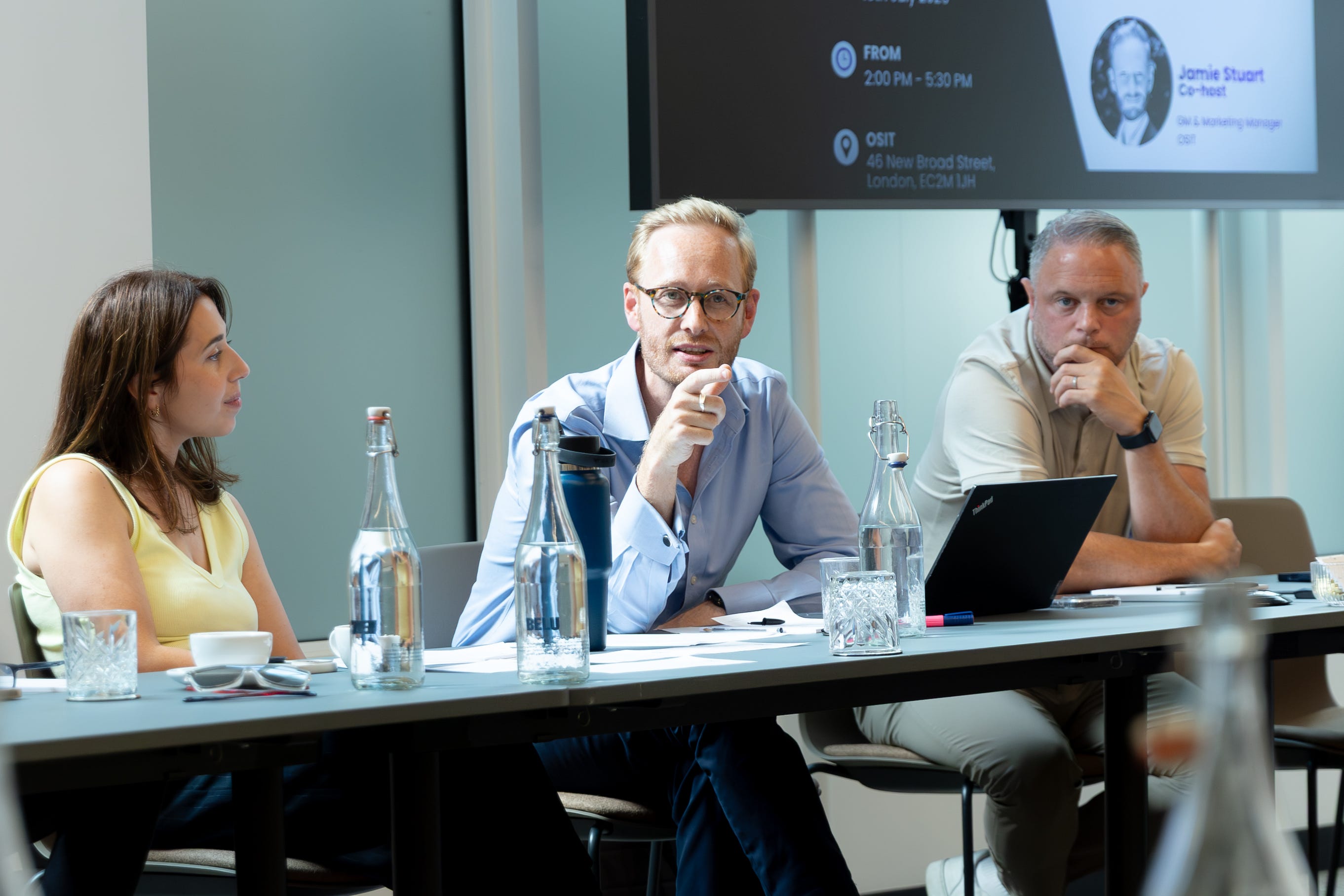
On 16 July, Brave Ideas and Flexspace AI brought together around 25 sales and marketing leaders from flex and coworking brands for a roundtable disuccsion at Office Space in Town’s Liverpool Street site in London.
View and download photographs from the event in the gallery above.

TL;DR
Prefer to skip the read and watch the highlights? Check out this Friday Five debrief with David Song, CMO at Flexspace AI
We wanted to explore one central question:
How can flex and coworking brands create a clearer path from audience, to qualified demand, to pipeline, to paid customers?
We structured the roundtable around two parts of that journey.
Filling the top of the funnel, with a focus on brand building and reaching customers before they enter the market.
Nurturing the middle of the funnel, with a focus on intent, response times, retargeting, sales and marketing alignment, and conversion.
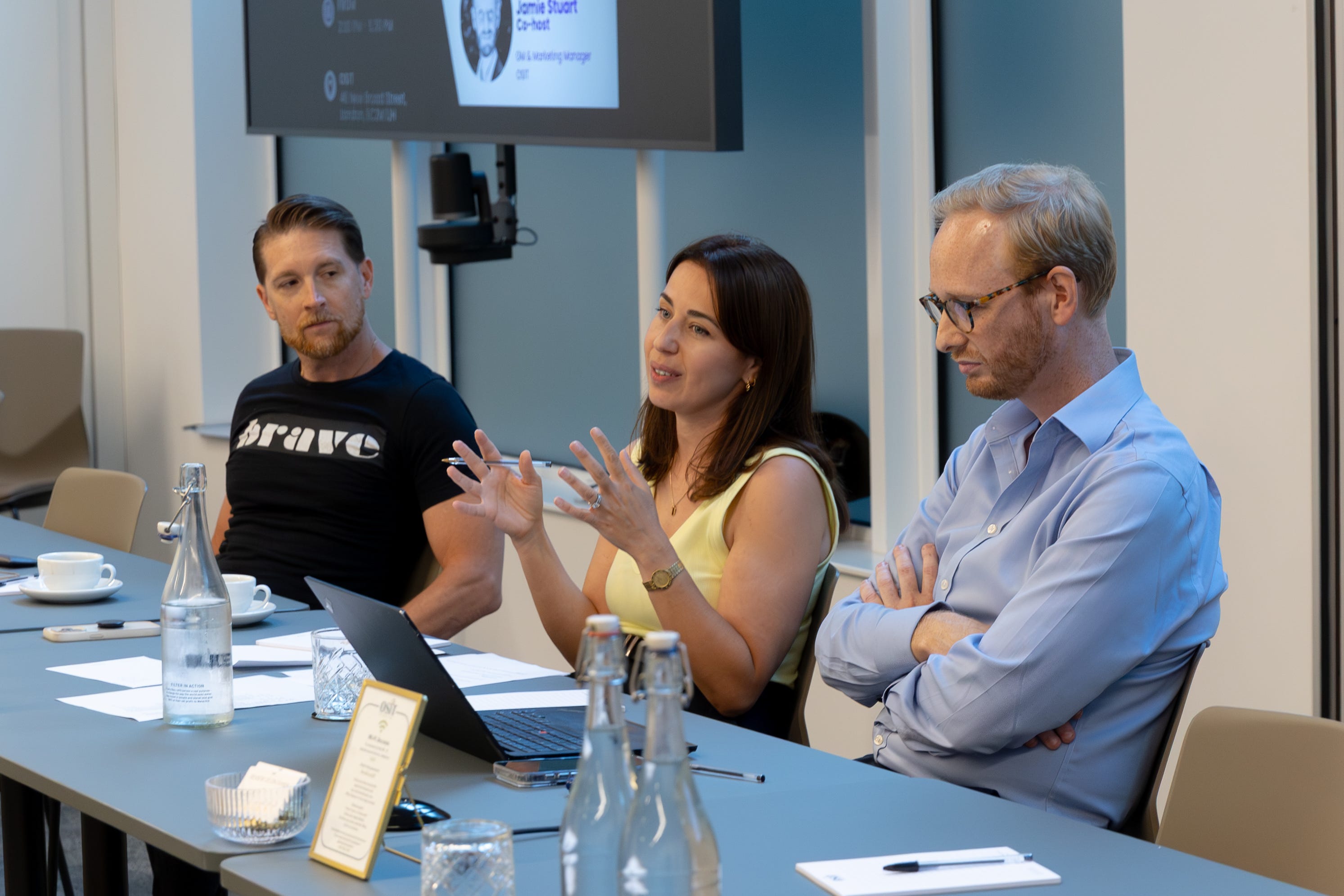
Led by co-hosts Jamie Stuart (OSIT) and Sarah Sich (Work.Life) the format was peer-led and everyone in the room brought current challenges, experiments, and examples from inside their own businesses.
The value came from people sharing what they are actually doing, where they are struggling, and what they are learning.
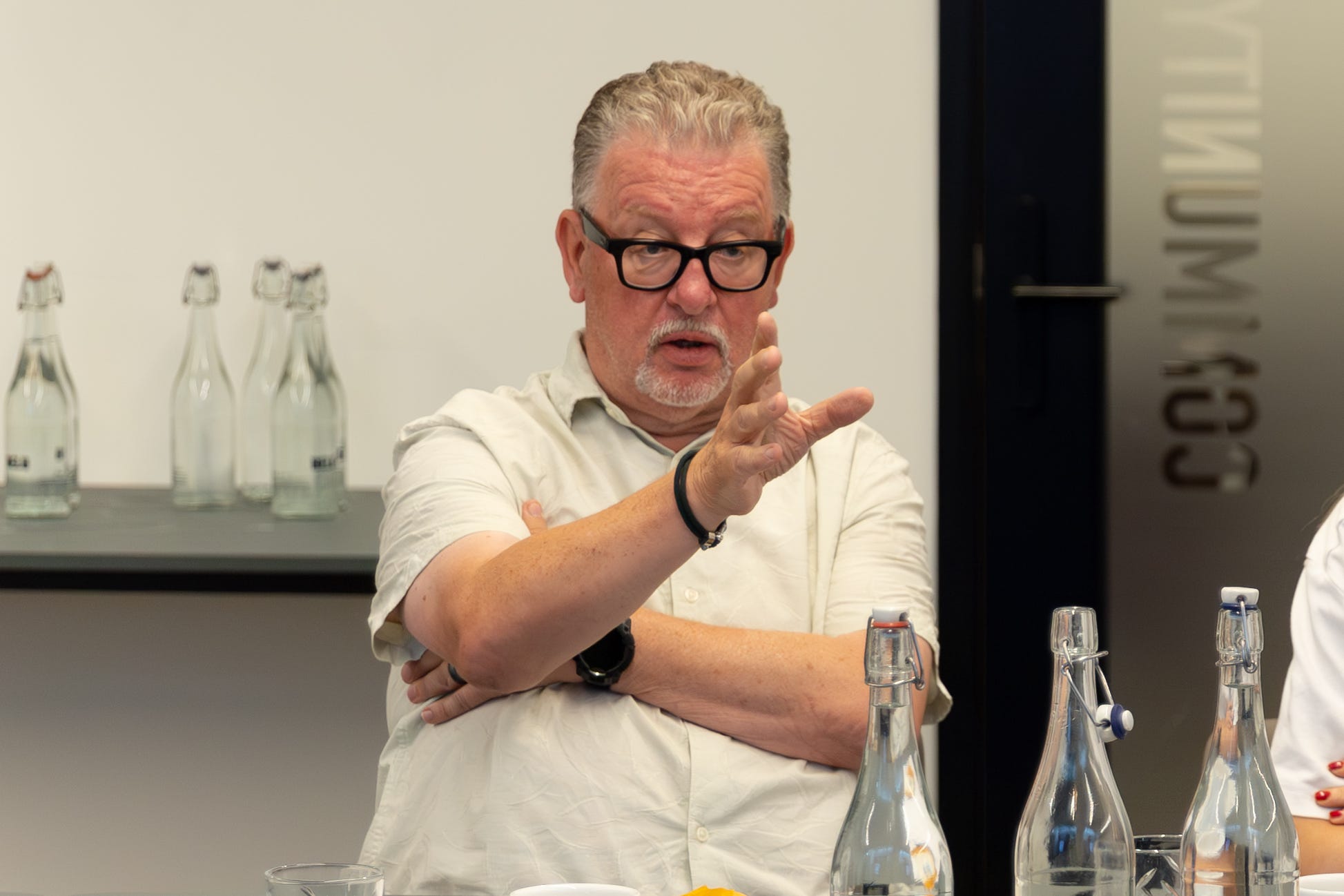
“Hugely impressed with you, Brave Corp and Flexspace AI over the last two days, from both a hospitality and an educational, thought provoking perspective. Returned to the office inspired and keen to delve deeper.”
-Andrew Butler, Commercial Director for FigFlex
Here are my biggest takeaways from the discussion…
Start with why, then get clear on who you serve
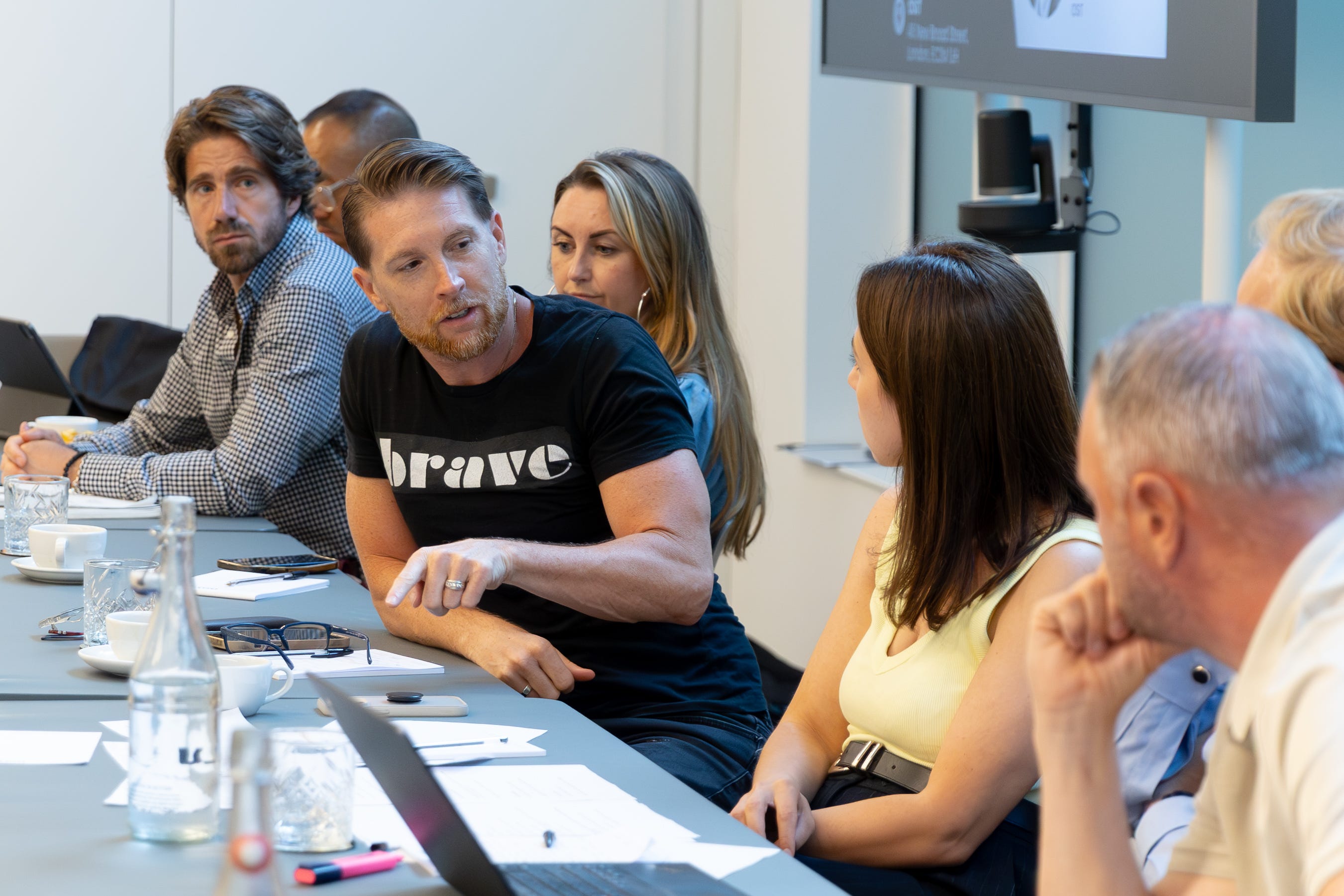
The demand funnel begins long before the content calendar, campaign, event, or sales offer.
It begins with clarity around why the brand exists, what it believes, and who it is designed to serve.
Simon Sinek’s Golden Circle remains a useful framework:
Why, the purpose or belief behind the business.
How, the principles and behaviours that bring that belief to life.
What, the products and services the business delivers.
Flex operators often lead their communication with location, desks, meeting rooms, amenities, pricing, and availability.
Those details help an active customer compare options.
Purpose and values give people a reason to connect with the brand before they need the product.
A stronger starting point is understanding what the business believes about work, people, culture, and the role of the workplace.
Then comes the audience.
Who shares those beliefs?
Who is the product genuinely suited to?
Which customers will value the experience enough to choose it, remain loyal, and recommend it?
A useful ideal customer profile combines commercial fit, practical need, behaviour, and shared values.
Operators need to understand the type of companies they want to serve, how those companies think about work, the cultures they are trying to build, and what they expect the office to enable.
My takeaway was simple:
Start with why, define who shares that belief, then build the product and customer journey around them.
That clarity should shape the brand, content, events, workplace design, community, service, calls to action, and sales experience.
Filling the top of the funnel
Most future customers are out of market today
One of the most useful distinctions from the roundtable was the difference between in market and out of market customers.
In market customers already have an active requirement.
They may know the location, team size, product, budget, and move date they need. They are comparing operators, speaking with brokers, visiting websites, and booking tours.
This is immediate demand, and the audience is relatively small.
A far larger audience are out of market customers, which includes the founders, CEOs, operations directors, people leaders, and workplace decision makers who may need space in three, six, or twelve months.
They are already forming opinions about brands, locations, products, and operators.
This is where top of funnel brand building earns its value.
The goal is to build familiarity and trust before the requirement becomes active. When someone eventually moves into the market, your brand should already feel known, relevant, and credible.
Sarah from Work.Life shared that around 85 percent of their business comes through direct leads.
Those direct enquiries are usually the visible outcome of repeated exposure across multiple channels.
A future customer may attend an event, follow the company on LinkedIn, see a video from one of its leaders, visit a location page, read a customer story, receive a newsletter, speak to someone in their network, and use an AI platform to compare providers.
By the time they submit an enquiry, the brand may already have done months of work.
Turn attendees into followers, followers into fans, and fans into customers
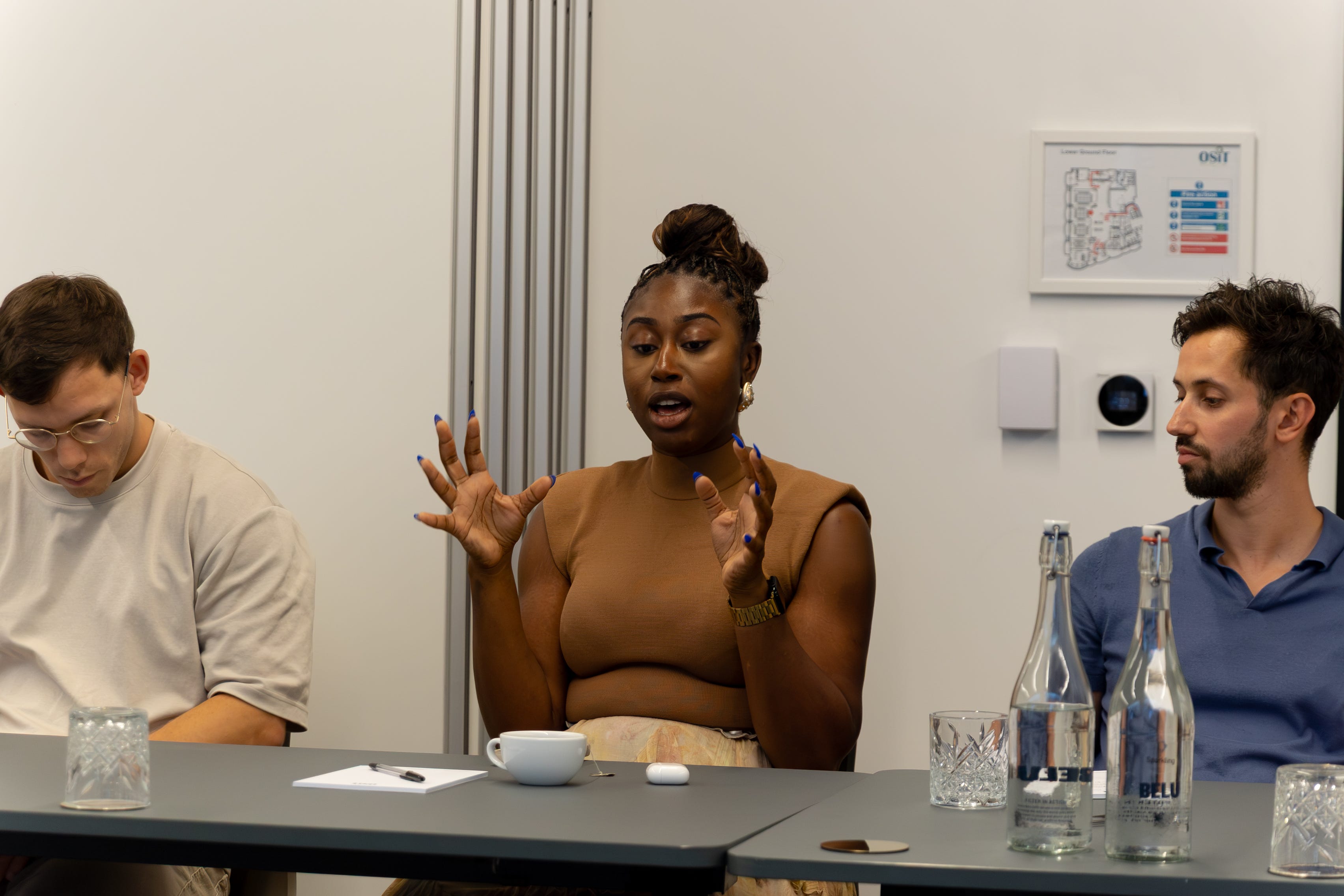
We spent time discussing events as a top of funnel strategy.
Events create the first meaningful interaction.
People attend because the subject matters to them, the peer group is valuable, or the discussion addresses a challenge they are already trying to solve.
The commercial value develops through what happens after they leave the room.
The progression looks like this:
Attendee → Follower → Fan → In market prospect → Customer
An attendee experiences the brand through the quality of the discussion, the people in the room, the venue, the hospitality, and the overall format.
A strong event gives them a reason to stay connected.
They follow the brand on social media, subscribe to the newsletter, listen to the podcast, attend future events, and continue engaging with the content.
That turns an attendee into a follower.
The role of ongoing content is to keep stimulating the relationship.
The brand continues sharing useful ideas, customer stories, workplace insights, event highlights, and evidence of its values in action.
Repeated engagement can turn that follower into a fan.
Fans understand what the brand stands for. They trust its point of view. They recognise the people behind it. They feel connected to the community around it.
That creates affinity and preference before an active workplace requirement exists.
When the fan eventually moves into the market, the operator is already top of mind.
The prospect understands the positioning, recognises the people, and has a sense of the experience the brand delivers.
Conversion becomes easier because the relationship started months before the sales conversation.
This is why judging an event only by the number of enquiries generated on the day misses much of its value.
Operators should also ask:
Did we attract the right ideal customer profile?
How many attendees followed the brand afterwards?
Did they continue engaging with our content?
Did they attend another event?
Did they eventually move into an active buying journey?
Did the relationship turn into revenue?
The event creates attention. Content sustains the relationship. Consistent engagement builds fans. Top of mind awareness supports conversion when the customer is ready to buy.
Brand led social should create memory and preference
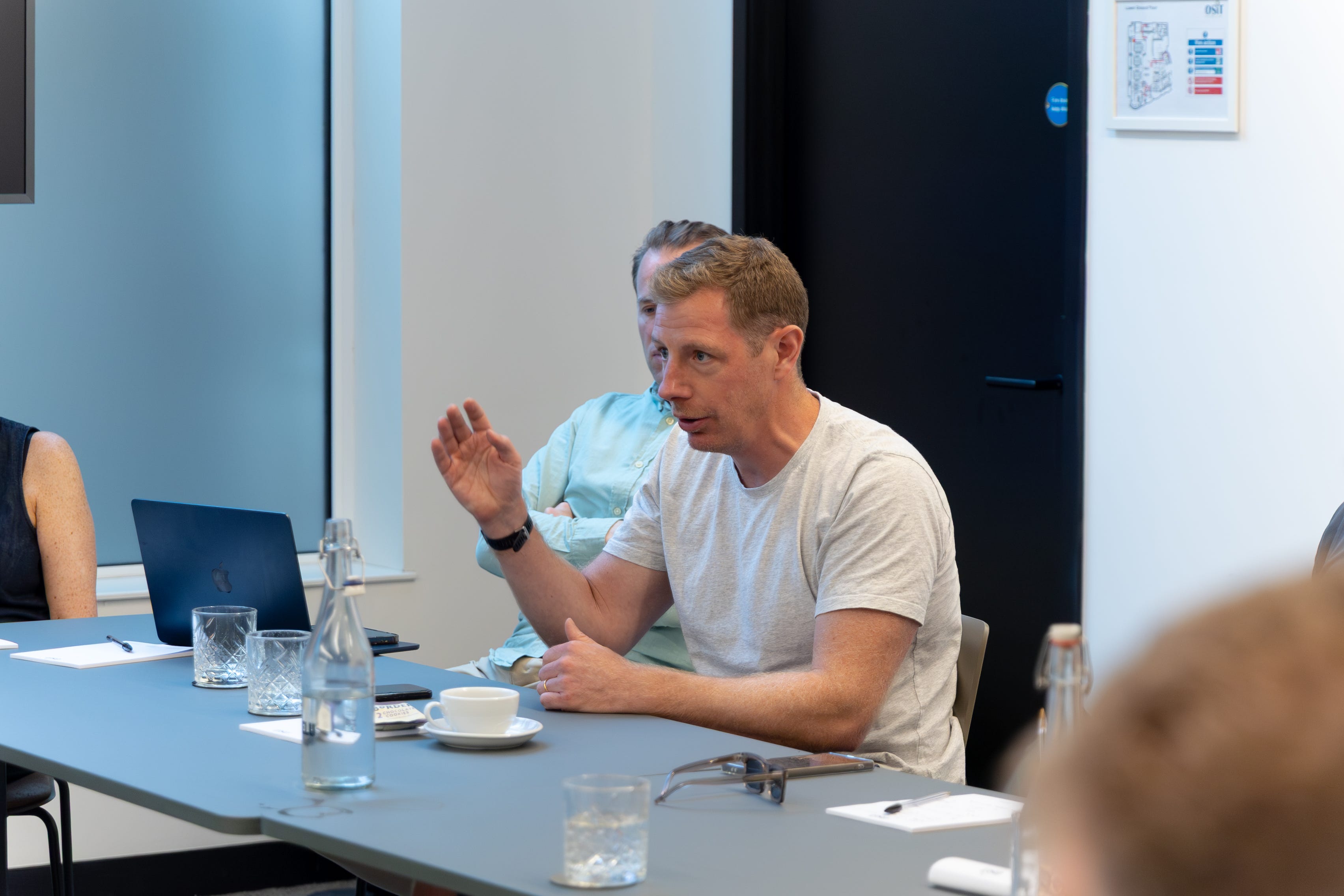
Social content plays an important role in moving someone from follower to fan.
The strongest content expresses the purpose, values, personality, and customer promise of the brand consistently.
Customers now research operators across more channels and over longer periods. They look at websites, social feeds, customer reviews, founder profiles, employee content, events, and recommendations from their networks. They are also using ChatGPT, Claude, Gemini, and other AI tools to research and compare providers.
The market is forming an impression of your brand before anyone speaks to sales.
Your content should help people understand who the operator is designed for, what the brand believes, what makes the product distinctive, what the workplace experience feels like, and why the operator is credible.
People connect with people.
Founders, sales leaders, community managers, and employees can all make the brand more visible, credible, and human.
The critical issue is consistency. The people representing the company need to reinforce a clear view of what the brand believes and who it serves.
Content should create a measurable next step
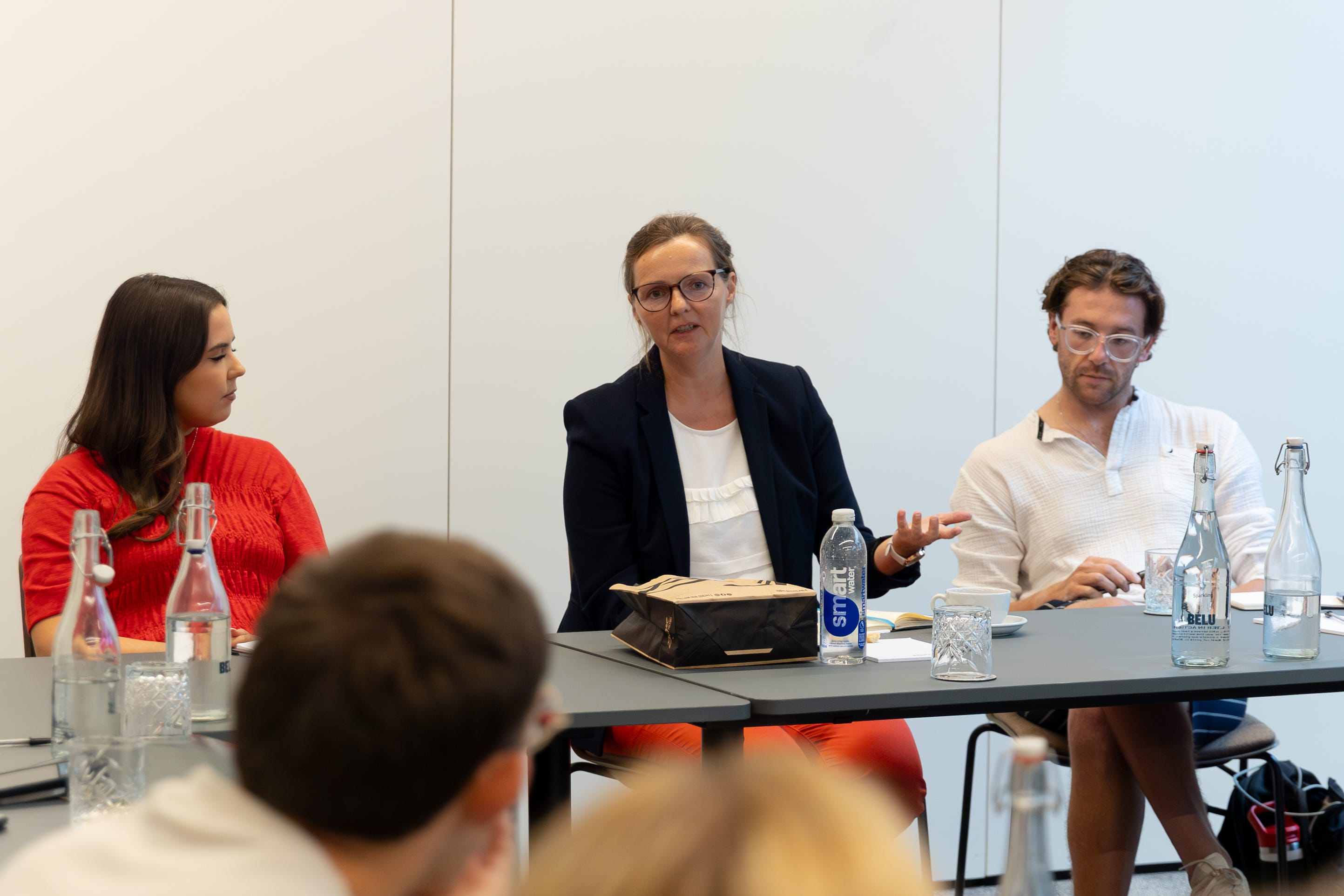
Reach, impressions, engagement, and follower growth can all be useful signals. Their commercial value depends on whether the right audience is paying attention and taking an observable action.
Content should communicate a clear point of view, tell relevant customer stories, demonstrate the workplace experience, explain specific use cases, and address common questions.
Social media rarely tells you whether someone is actively searching for space. The initial call to action should therefore be relevant and low friction.
That might include following the brand, registering for an event, subscribing to a newsletter, reading an article, listening to a podcast, or visiting the website.
Each of those actions creates a signal.
The role of the content is to generate enough interest for someone to take the next step and give the operator a clearer indication of what they care about.
Once someone takes that measurable action, the middle of the funnel begins.
Nurturing the middle of the funnel
Behaviour tells you when interest is becoming intent
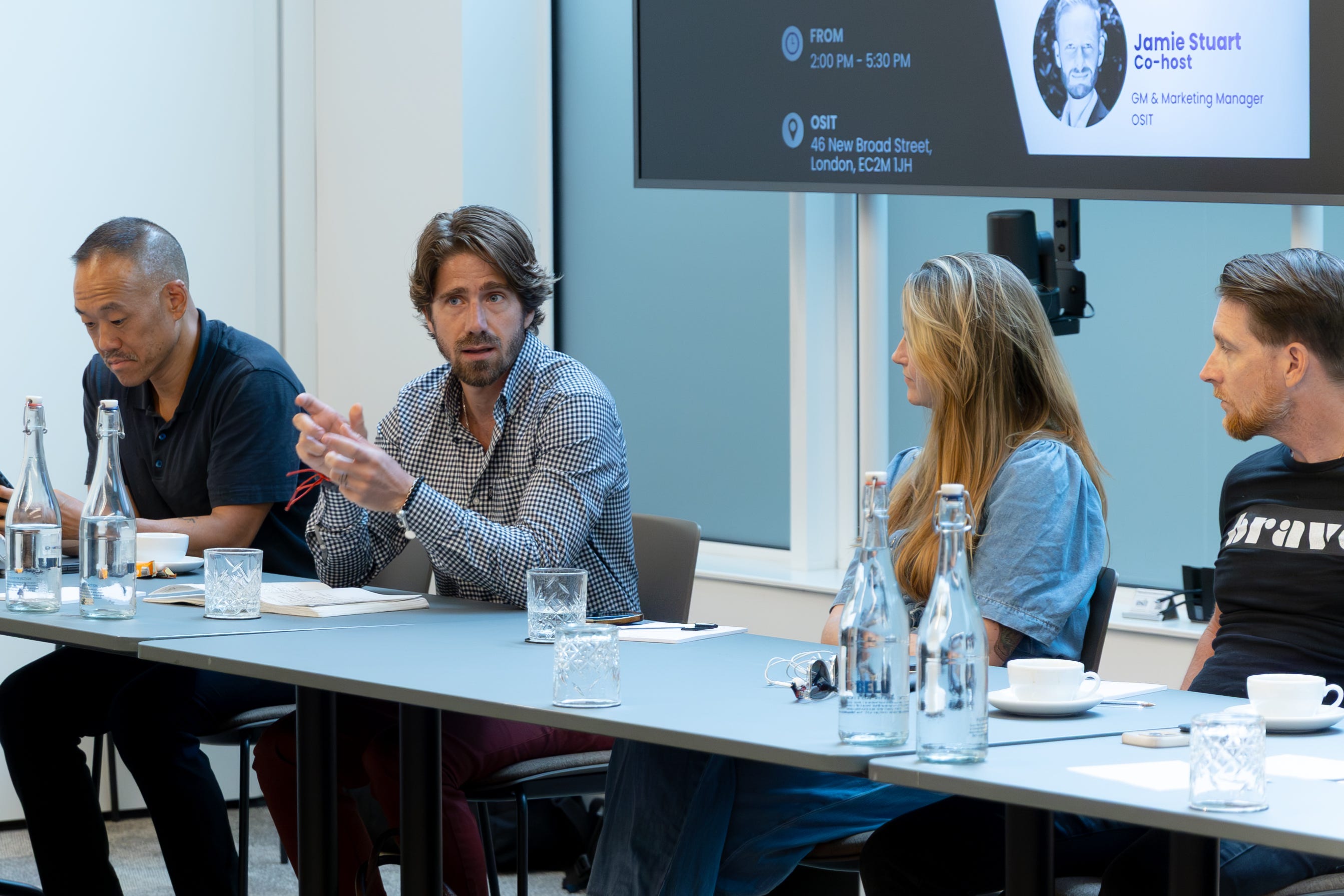
A behavioural signal only becomes commercially useful when the operator can capture it, connect it to the wider customer journey, and decide what should happen next.
A CRM such as HubSpot can bring together event registrations, website activity, email engagement, enquiries, day pass bookings, tour requests, sales notes, and follow-up communication into one customer record.
That record should help sales and marketing teams understand how the prospect discovered the brand, which topics, locations, or products attracted their attention, what actions they have taken, what information they have already received, who owns the relationship, and what the next relevant step should be.
This creates the basis for more relevant retargeting, lead nurturing, and sales follow-up.
The technology only creates value when the data is accurate and teams use it consistently.
Duplicate records, incomplete notes, inconsistent lead stages, and conversations taking place outside the CRM reduce visibility across the journey.
The customer sees one brand. Their experience should remain connected across social media, the website, marketing communication, sales conversations, and the workplace itself.
Once intent is visible and ownership is clear, response time becomes part of the brand experience.
Response time is part of the brand experience
Once a prospect signals intent, speed matters.
A fast and relevant response maintains momentum and builds confidence. Every delay creates more time for the prospect to engage with another operator.
Teams need clear answers to several operational questions:
Who owns the enquiry?
How quickly should they respond?
Which leads need immediate human attention?
Which information can be delivered automatically?
How is the conversation recorded?
When does the opportunity move from marketing to sales?
The communication channel also matters.
Email and phone calls remain important. WhatsApp can be more effective when someone wants a quick answer about availability, pricing, a tour, or a meeting room.
It can support tour coordination, reminders, availability updates, and ongoing communication during the decision process.
Those conversations still need ownership and visibility. Important customer information cannot remain trapped inside an individual employee’s phone.
AI sales agents can improve speed and consistency

We also discussed the role of AI sales agents.
They can answer common questions, gather initial requirements, qualify prospects, recommend next steps, and respond outside normal working hours.
Their value depends on accurate information, clear commercial processes, and a reliable handover to a human salesperson.
An effective AI sales agent needs access to current product and availability information, a clear understanding of the ideal customer, qualification criteria, appropriate brand language, escalation rules, and CRM integration.
The measures should be commercial.
Did response times improve?
Were prospects qualified accurately?
Did more people complete an enquiry?
Did tour bookings increase?
Did human sales teams follow up faster?
Did more opportunities convert into paid customers?
AI sales agents are useful when they make the buying journey faster, easier, and more relevant.
Remarketing, remarketing, remarketing
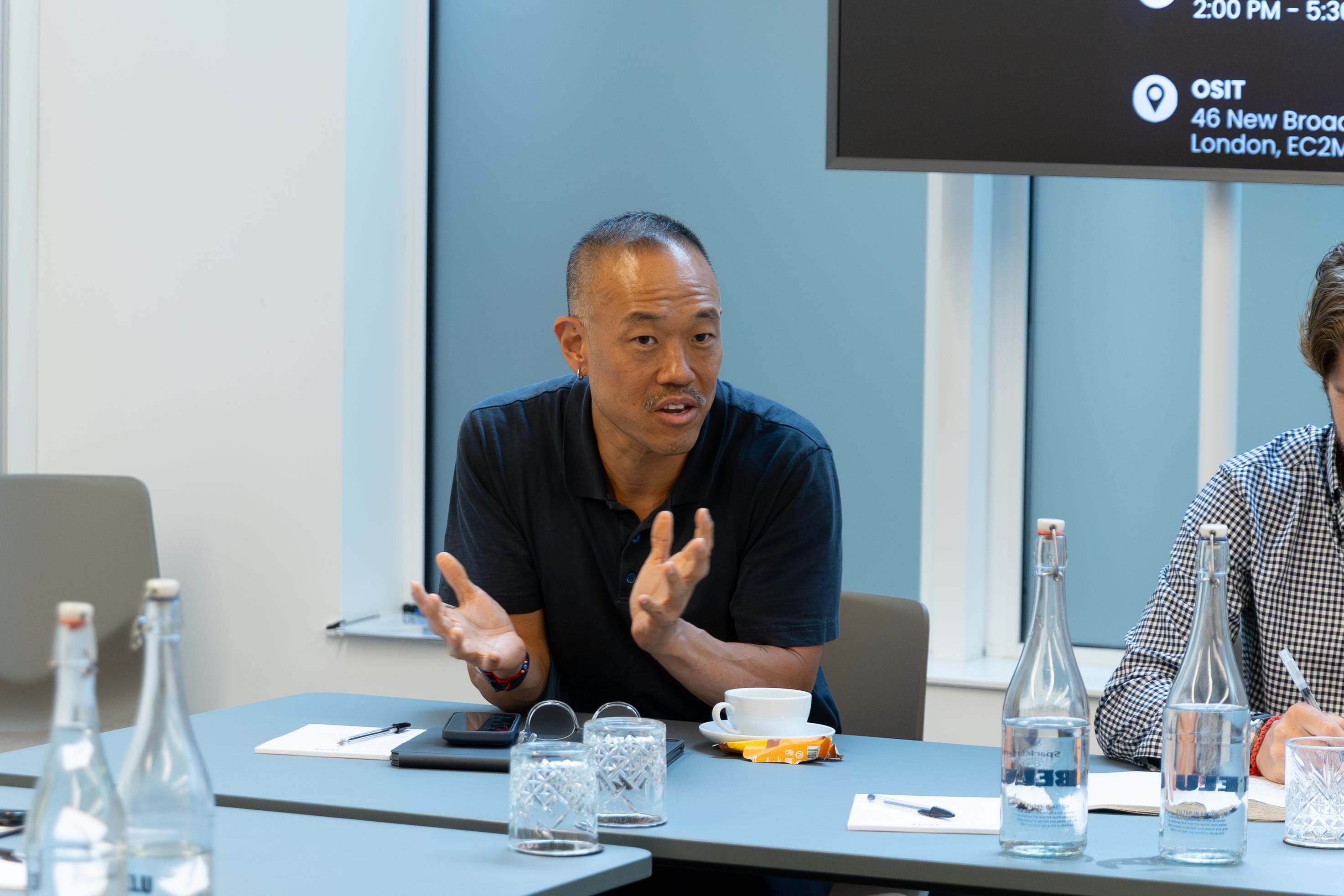
David Song’s strongest takeaway from the session was repeated three times:
“Remarketing, remarketing, remarketing.”
One interaction is rarely enough.
Prospects are busy. Requirements change. Budgets need approval. Teams compare several options. Decision makers enter and leave the process.
The brand needs to remain visible while those factors develop.
Remarketing can happen through LinkedIn, paid social, search, email, telephone, WhatsApp, website journeys, direct mail, future events, and the physical workplace.
The message should respond to the prospect’s behaviour.
Someone who viewed a location page may need availability information.
Someone who attended an event may benefit from related content.
Someone who booked a day pass may be ready for a tour.
Someone who completed a tour may need a customer story, revised proposal, availability update, or further conversation.
A completed tour remains a high intent opportunity, even when the decision is delayed.
The timing may be wrong. The budget may need approval. The team may still be comparing options. The move date may have changed.
That prospect already knows the product and has shown meaningful intent.
The opportunity needs structured follow up.
Sales and marketing need to manage one revenue journey

Customers can feel the gaps created by disconnected sales and marketing teams.
Marketing needs feedback on which audiences convert, which messages lead to tours, where prospects become stuck, and which campaigns create commercially valuable demand.
Sales needs visibility into where the customer came from, what content influenced them, which behaviours signalled intent, and what information they have already received.
The handover should feel like the next step in the same conversation.
Shared data, clear ownership, agreed lead stages, and common revenue outcomes make that possible.
Matching online UX with onsite CX
This was one of my biggest takeaways from the day.
Being brand-led means creating consistency between what someone sees online and what they experience onsite.
The social content, website, digital booking journey, sales communication, arrival, tour, service, and follow up should all express the same positioning and values.
The online user experience creates the expectation.
The onsite customer experience fulfils it.
A brand that presents itself as welcoming, energetic, premium, community focused, or hospitality led needs to deliver those qualities when the prospect enters the workplace.
The tour should reflect the personality of the brand, the specific requirements of the customer, the quality of the service, the atmosphere of the workplace, and the value of the overall experience.
A consistent online and onsite journey strengthens trust and supports conversion.
The strongest operators design the digital and physical journeys as one connected brand experience.
Measure the full journey from audience to paid customer
The commercial equation behind all of this is lifetime value compared with customer acquisition cost.
Operators often focus on the cost of an enquiry or tour booking. A fuller view considers the entire relationship.
The acquisition journey may include events, content, paid distribution, remarketing, sales follow up, free day passes, several tours, proposal development, and ongoing nurturing.
The customer value may include the initial membership plan, the length of the relationship, additional products and services, expansion, referrals, advocacy, and future requirements. Jamie from OSIT shared their average member tenure is 4.5 years.
A high value customer can justify a longer nurturing period and multiple interactions.
The more useful question is:
How much did it cost to move this person from audience member, to follower, to fan, to in market prospect, to paid customer, and how much value did that relationship create?
That gives sales and marketing teams a common commercial outcome.
It also creates a more complete picture of return on advertising spend.
The demand system for flex
The roundtable left me with eight connected principles for building demand:
Define why the brand exists and who it serves
Build relationships with out of market audiences
Turn attendees into followers, and followers into fans
Match content and product calls to action with customer intent
Capture behavioural signals and respond quickly
Retarget consistently through relevant channels
Align sales, marketing, online UX, and onsite CX
Measure customer acquisition cost against lifetime customer value
View and download photographs from the event in the gallery above.
Final thoughts
My biggest takeaway was that demand generation in flex is a connected system.
Brand builds familiarity before the customer enters the market. Content and events turn familiarity into affinity. CRM, quick communication, and remarketing move people through the buying journey. The onsite experience determines whether the brand promise holds up.
Operators that design each stage deliberately will have a better chance of turning audience into paid customers.
Thank you to Flexspace AI, Office Space in Town, our co-hosts Sarah and Jamie, and everyone who contributed openly to the discussion.
The willingness to share practical examples, honest challenges, and current experiments made the roundtable valuable.
That is exactly what a Brave Ideas roundtable should deliver.
Happy Hour
Huge thank you to Jamie Stuart and OSIT for hosting the post-event happy hour in their super cool speakeasy bar.


