
Enterprise Flex: How Big Business Is Powering the UK’s Office Resilience
Part 4 of 4 · Q3 Rubberdesk Report: Flex Is the Backbone of the Brave Economy
Enterprise is leading the flex revolution.
Once the preserve of plucky SMEs, multi-nationals now actively embrace flex space into their portfolio, as these large firms have settled into hybrid working patterns and are eager for more flexibility than traditional long leases provide them with. Companies like Microsoft, Deloitte, HSBC, advertising giants WPP and even Amazon have all hit the headlines recently for opting to add flexible workspace to the mix of their property footprint.
Our latest Q3 report bears this out.
Rubberdesk data shows that large, 50+ person offices are currently the most hotly contested asset class. And availability of those larger spaces has accordingly dropped 7.7%, as companies snap up premium turnkey spaces.
Responding to the “Super-Flex” demand
Our figures suggest a scarcity of “enterprise-ready” stock.
Large companies want flex, but the market is still comprised mostly of smaller units. This mismatch is driving the price increase, and also creating the perfect opportunity for operators or landlords to convert more space for a market that’s willing and ready. Rubberdesk data shows supply of 50+ desk offices, which now make up 36% of total available floor space but only 8% of listings.
Other reports underline this potential. Four out of 10 (42%) of European corporates plan to increase their flex usage over the next three years (source: JLL via OfficeRnD). Although some traditional landlords are answering the call, the market must continue to pivot to create larger, self-contained “Super Flex” units to meet this demand.
Flex is now a “bridge to quality”
Smart enterprise businesses have woken up to the fact that choosing a flex route allows them to access premium, amenity-rich locations and buildings without the capital expenditure or long-term liability of traditional leases.
Their staff also win, as the demand for wellbeing-focused spaces is well met by modern flexible offices. Ergonomic furniture, biophilic elements, and dedicated wellness rooms can all be found in flex workspaces, which have been designed to support employee health, productivity, and retention.
Privacy is an enterprise priority
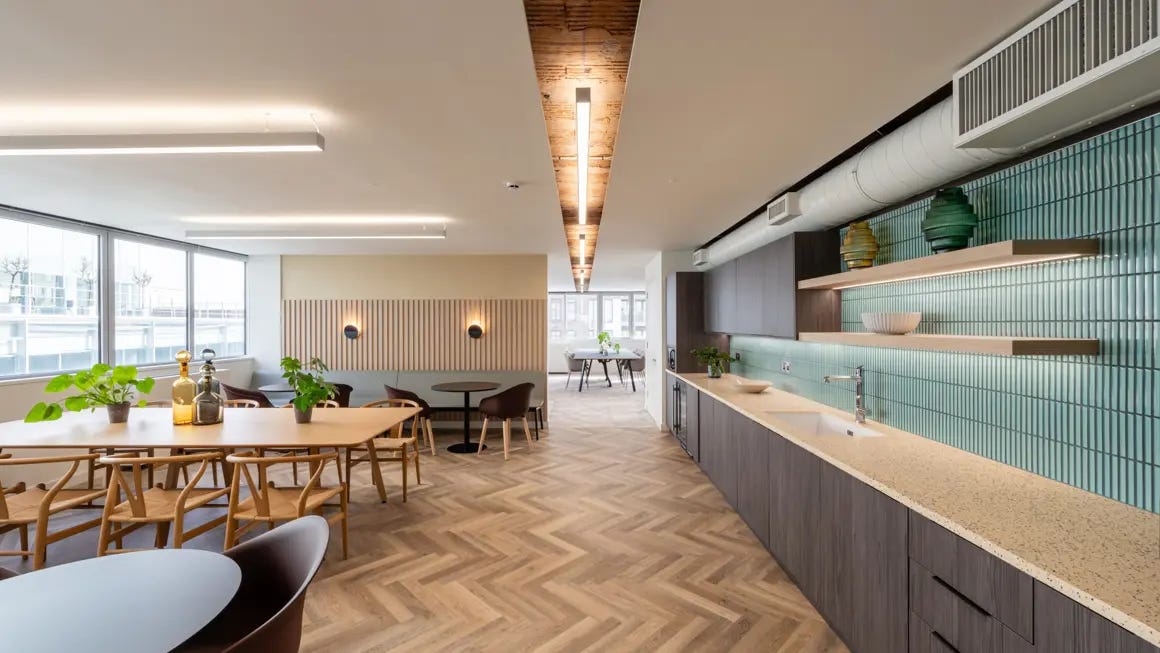
The data also shows a clear direction of travel for enterprise businesses opting for flex: a move towards making a managed office their corporate home. Unlike their serviced office cousins, managed offices offer more customisation opportunities, giving big firms the ability to brand the space they occupy.
Floors are self-contained with managed services, so there’s no need for large firms to share amenities with a range of other businesses. These are more private, ownable spaces that suit big companies. Our data shows that availability for these units fell twice as fast as standard serviced offices, driving prices up 0.5% to £935/desk. Enterprises don’t just want basic serviced offices but premium managed spaces.
A look at regional resilience

The capital is still the top destination for enterprise businesses to base their operations. And in London, availability for large units dropped 9%. However, the North also showed its potential, with Manchester seeing an even sharper drop in availabilty, of 11.5%. This, in turn, drove a 4.4% rate hike in the North.
Large companies are increasingly turning to flex as a tool for control, culture and competitive edge. Rubberdesk’s Q3 data confirms that enterprise demand is driving the market’s strength.
The data paints a clear picture:
Enterprise adoption is the engine behind the flex market’s resilience, and the brave economy it supports.
Published exclusively in partnership with early access to Rubberdesk’s Q3 2025 report.


